All articles

July 23, 2026

By Sam Gao, Founder of Diningprint

How to Choose a Napkin & Paper Supplier for Your Coffee Shop (2026 Buyer's Checklist)

Use these seven supplier checks before choosing napkins, cup sleeves, paper bags, stirrers, or branded paper packaging for a coffee shop.

  • coffee shop packaging
  • napkin supplier
  • paper supplier
  • custom napkins
  • coffee cup sleeves
  • restaurant paper goods
  • supplier checklist
  • B2B sourcing
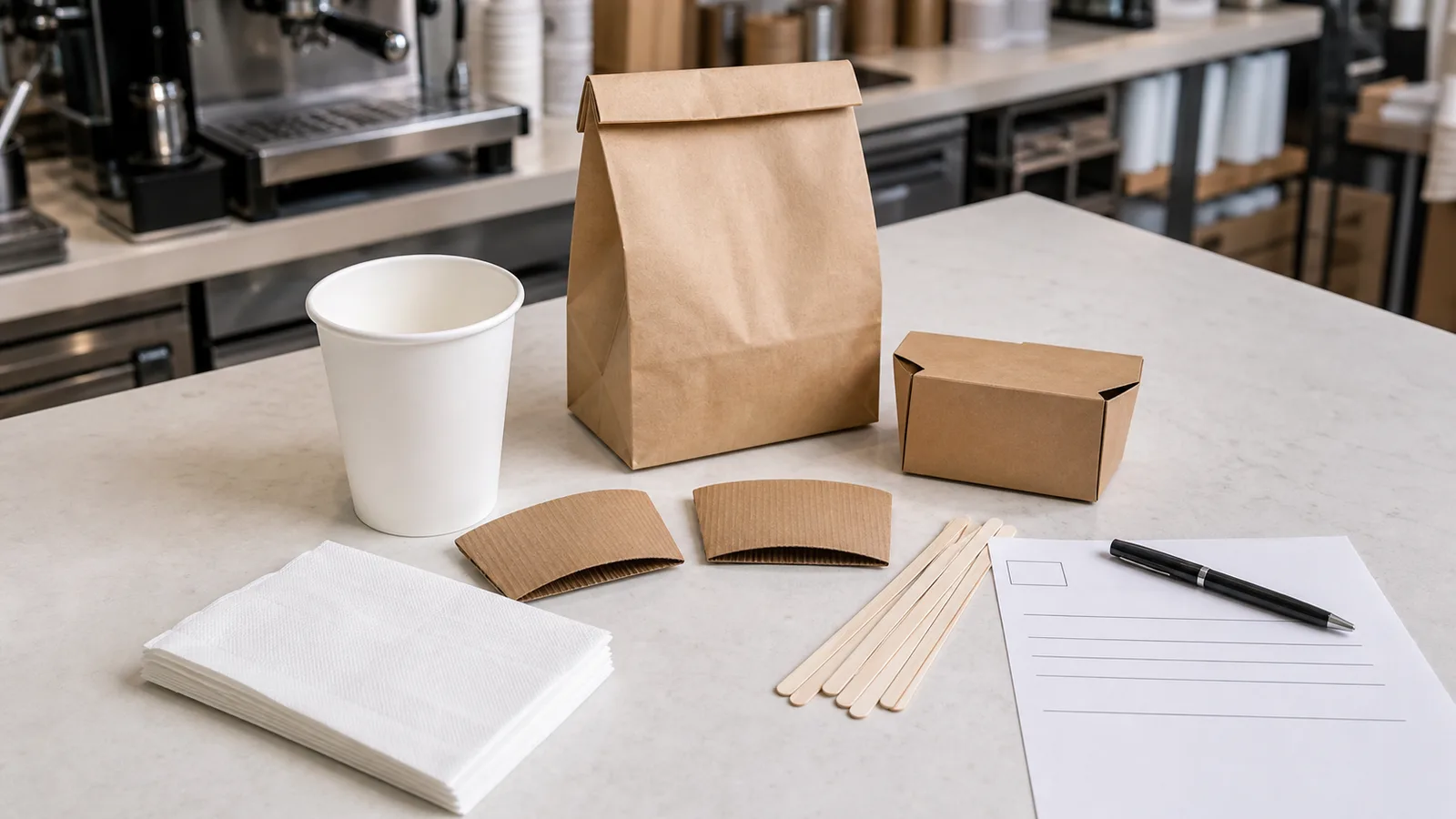
Coffee shop supplier review table with paper cup sleeves napkins wooden stirrers kraft bag and pastry box
Coffee shop paper suppliers should be evaluated by proofing, material route, lead time, hidden costs, and practical ordering support.

The wrong paper supplier costs more than the paper

A coffee shop usually notices the supplier problem only after the packaging is already in use: napkins feel too thin at the counter, the printed logo shifts on the next reorder, cup sleeves arrive after the seasonal menu launch, or the invoice adds plate, artwork, and freight costs that were not clear in the first quote.

For cafes, roasters, bakery cafes, hotel coffee bars, and small coffee chains, the safest supplier is not simply the one with the lowest unit price. It is the one that can answer the same seven questions clearly before your artwork goes into production.

The seven checks before choosing a coffee shop paper supplier

Use this section as a short RFP. Send the questions to any napkin, cup sleeve, paper bag, or stirrer supplier before you compare quotes.

1. Is the order path clear before artwork starts?

Good suppliers separate the sample path, first order, and repeat bulk order. If the first reply only says "send logo for price," you still do not know whether the supplier understands your cup sizes, napkin fold, print method, packing, or destination market.

What to ask: "Before you quote, can you confirm the sample route, production route, artwork proof step, and what information you still need from us?"

2. Do they provide a real digital proof before production?

A digital proof should show the logo position, safe area, color reference, fold or seam position, and any QR code placement. For printed cup sleeves, napkin bands, and small packaging, a proof is often more useful than a production video because it catches the exact problem buyers pay for later: the artwork landing in the wrong place.

What to ask: "Will you send a digital proof with the logo placed on the actual dieline before we approve a sample or bulk order?"

3. Does the print method match the product?

Different coffee shop items need different print routes. Napkins and paper sleeves can use paper printing. Wooden stirrers usually need hot stamp on the wood or a printed individual wrapper. Paper cups need a cup-specific curved artwork area, and the lining or coating should be confirmed before the design is final.

What to ask: "For each item, are you printing the paper surface, the wrapper, the cup body, or the wood itself, and what print method are you recommending?"

4. Can they explain the paper and material options without vague green claims?

Coffee shop buyers often ask for FSC paper, recycled content, compostable cups, plastic-free stirrers, or biodegradable packaging. Those claims are not interchangeable. The supplier should connect the claim to the material route and the destination market, not simply put "eco-friendly" on the quote.

What to ask: "Which items can be quoted with FSC, compostable, or food-contact documentation, and which claims should we avoid printing on the packaging?"

5. Are lead times stated by step, not as one optimistic number?

A useful lead-time answer separates artwork review, proofing, sample preparation, bulk production, inspection, and freight. A single "fast delivery" promise does not help a cafe opening, seasonal drink launch, or multi-location rollout plan inventory.

What to ask: "Can you break the timing into proof, sample, bulk production, packing, and freight, and tell us which step usually causes delays?"

6. Are hidden costs visible before the buyer chooses a supplier?

For coffee shop paper goods, extra cost can come from artwork cleanup, plate setup, color matching, carton marks, sample courier, small-batch handling, destination duties, and split shipments. The exact quote may depend on artwork and volume, but the cost categories should not be a surprise.

What to ask: "Besides the product unit price, what setup, proofing, packing, freight, or document costs might apply to this order?"

7. Can the supplier respond like a production partner?

Response speed matters, but useful response quality matters more. A supplier should be able to say when a napkin should be printed, when a cup sleeve is a better first step than a printed cup, when a stirrer should stay unbranded, and when the buyer should sample before committing.

What to ask: "Based on our menu, order volume, and launch timing, which one or two SKUs would you brand first, and which would you leave plain for now?"

A practical first kit for coffee shops

Most first projects do not need every product customized at once. A better starting point is a small kit that customers actually touch: custom coffee shop packaging built around napkins, cup sleeves, wooden stirrers, paper bags, or pastry boxes.

If the cafe is still testing volume, start with the lower-risk branding surfaces: napkin, cup sleeve, or stirrer wrapper. If the design and monthly repeat order are already stable, add printed cups, bags, or multi-SKU packaging in the same artwork system.

Buyer situationBest first supplier conversationWhy it works
New cafe openingNapkin, cup sleeve, and paper bag sample routeTests brand feel before committing to a larger printed cup program.
Roaster selling beans and takeaway drinksPaper bags, cup sleeves, and counter napkinsConnects retail bags and drink service under one visual system.
Hotel or event coffee stationNapkins, wrapped stirrers, and optional wooden cutleryPrioritizes hygiene, table presentation, and repeatable replenishment.
Small chain or multi-location rolloutShared proofing file set for sleeves, napkins, bags, and cupsKeeps reorders consistent across locations and seasons.

How to make the supplier comparison fair

Do not compare one supplier’s bulk paper napkin quote with another supplier’s sample-kit quote. Do not compare FOB pricing with door-delivered pricing. Do not compare a plain white napkin with a printed, folded, packed, and carton-marked napkin. Ask each supplier to quote the same product, same artwork count, same packing method, same destination, and same proofing step.

If you are unsure which data to send, prepare this short brief:

  • Store type: cafe, roaster, bakery cafe, hotel coffee bar, or chain.
  • Items needed: napkin, cup sleeve, paper cup, paper bag, pastry box, wooden stirrer, or stirrer wrapper.
  • Artwork status: vector logo ready, rough logo only, or no artwork yet.
  • Service model: dine-in, takeaway, delivery, catering, events, or retail beans.
  • Destination market and any FSC, compostable, or food-contact documentation requirement.
  • Launch deadline and whether a sample is needed before bulk production.

Where Diningprint fits in this checklist

Diningprint coordinates custom disposable tableware and paper packaging for restaurants, cafes, hotels, event caterers, and food brands. For coffee shop projects, we usually recommend proving the artwork on one visible low-risk item first, then extending the same design system to the next SKU once the buyer has seen the sample.

Want to see how we answer the seven questions above? Start with the printed sample kit, send a first inquiry with your coffee shop SKUs, or use the dieline and pre-production sample workflow if your artwork is already close to production-ready. We reply within one to two business days with the proofing path, missing specs, and the practical quote route.

Frequently asked questions

Quick answers from buyers like you

What should a coffee shop ask a napkin or paper supplier first?

Ask the supplier to explain the sample route, digital proof, production route, material options, lead time, hidden costs, and which SKU they would brand first. A useful supplier answer should be specific to your menu, artwork status, destination market, and launch timing.

Should a coffee shop customize napkins, cup sleeves, or cups first?

Most coffee shops should test lower-risk branding surfaces first: napkins, cup sleeves, paper bags, or stirrer wrappers. Printed cups make sense once the design and repeat monthly volume are stable.

How do I compare coffee shop packaging supplier quotes fairly?

Compare the same product, artwork count, packing method, proofing step, destination, and trade term. Do not compare a sample quote with a bulk quote, or FOB pricing with door-delivered pricing.

What is a good supplier proofing process for coffee shop paper goods?

A good process starts with artwork review, then a digital proof on the correct dieline or product template, then a physical sample when the buyer needs to check paper feel, color, fold, sleeve fit, or printed position before bulk production.

Read next

Keep going on related sourcing topics.

Guide

Custom Printed Napkin Bands for Restaurants — B2B Buyer's Guide (2026)

Format, paper grade, print method, MOQ tier, adhesive food-safety — plus the FSC ink-certification gap most factories don't disclose. The 2026 B2B buyer's guide to custom printed napkin bands and belly bands.

Read article

Guide

Custom Wooden Coffee Stirrers — Bulk B2B Buyer's Guide (2026)

Bamboo or birchwood, 11–19 cm, hot-stamp foil or printed wrapper. The 2026 B2B guide to custom wooden coffee stirrers — formats, MOQ tiers, plastic-ban compliance, and the 3 specs that stop your sticks from warping.

Read article

Guide

Paper vs Plastic vs PLA Cups: The 2026 Foodservice Cup Comparison

The real cup decision isn't paper vs plastic — it's the lining. PE-lined is cheap but not compostable; PLA-lined is compostable but pricier; plastic is clear but scrutinized. Here's the B2B comparison, plus single-wall vs double-wall builds.

Read article

Guide

Custom Chopstick Sleeve Printing: From Dieline to Pre-Production Sample

A sample-first workflow for restaurant buyers ordering custom chopstick sleeves: lock the dieline, approve the proof, test the pre-production sample, then move to bulk production.

Read article

Guide

Compostable vs Biodegradable vs Recyclable: The Green Claims That Get You Fined

"Biodegradable" is the single highest-risk word on disposable foodware — deceptive under the FTC, unlawful on plastic in California, and banned generically in the EU from September 2026. Here's what each green claim legally means, and how to make one you can defend.

Read article

For your industry

Custom branded coffee shop packaging and cutlery, factory direct.

Build one coffee shop supply kit around the items customers actually carry: printed cups, cup sleeves, napkins, wooden stirrers, paper bags, and pastry boxes. Start with lower-MOQ sleeves, napkins, or stirrers, then scale to cups and multi-SKU repeat orders once the artwork is proven.

See guide

For your industry

Custom bakery packaging for pastry takeout, cafés, and gifting.

Build a bakery packaging kit with greaseproof pastry bags, kraft boxes, printed napkins, coffee cups, stirrers, and branded paper sleeves. Designed for morning takeaway, gift boxes, market stalls, and bakery café counters.

See guide

For your industry

Biodegradable cutlery kits and custom tableware for event catering.

Custom wooden cutlery kits, branded chopsticks, and printed napkins for event catering, weddings, festivals, stadium foodservice, and corporate dinners. 3-piece wooden kit (fork + spoon + knife + napkin in custom sleeve), MOQ 5,000 (digital) or 20,000 (offset), priced on request. Lead time 25-30 days plus freight.

See guide