By Sam Gao, Founder of Diningprint
Custom Chopstick Sleeve Printing: From Dieline to Pre-Production Sample
A sample-first workflow for restaurant buyers ordering custom chopstick sleeves: lock the dieline, approve the proof, test the pre-production sample, then move to bulk production.
- chopstick sleeve dieline
- custom chopstick printing
- pre-production sample
- restaurant packaging
- artwork proof
- B2B
- factory direct
TL;DR — the sample-first workflow
- A custom chopstick sleeve order should move through dieline → digital proof → pre-production sample → bulk production, not straight from a logo file to a purchase order.
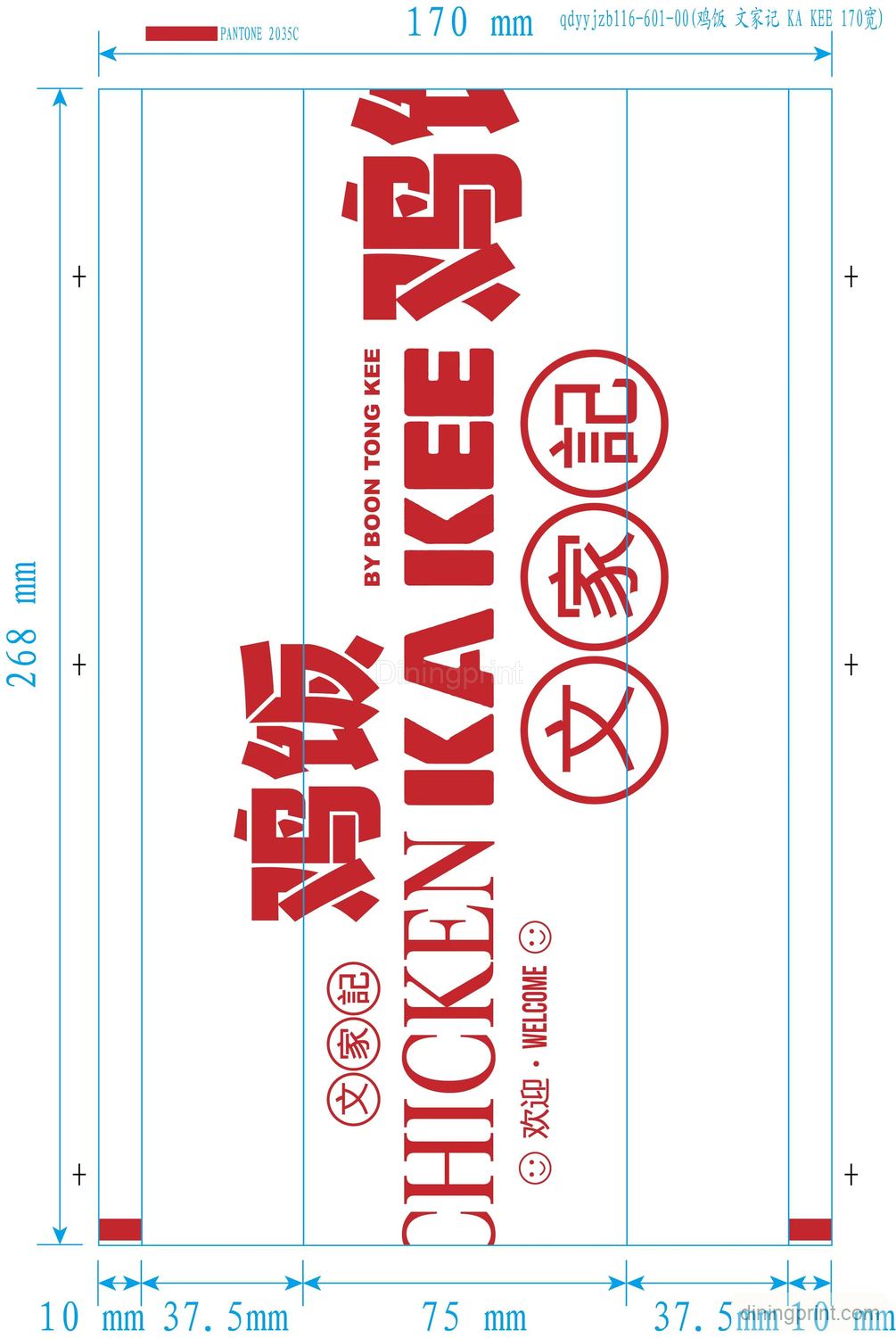
- The dieline locks size, fold, seam, bleed, safe area, and QR/social placement before a factory quotes the print run.
- The pre-production sample is the first moment you see the sleeve on the actual paper grade with the actual print method. It catches color drift, fold misalignment, and wrong pulp grade before 20,000+ sleeves are printed.
- For restaurants and catering buyers, the safest first sequence is a digital proof in 1–3 days, a physical sample in 5–10 days, then the bulk run after sign-off.
Why the proof matters more than a factory video
When a buyer asks for custom chopstick sleeve printing, they usually want to see a factory video. That can be useful for checking production exists, but it does not answer the questions that decide whether the order will work: will the logo sit inside the fold line, will the QR code scan after wrapping, will the kraft paper change the brand color, and will the sleeve slide cleanly over the chopsticks?
A sample-first workflow answers those questions with the product in your hand. For restaurants, sushi bars, ramen shops, catering companies, and delivery brands, the sleeve is a customer-facing item. It sits on the tray, travels in the takeout bag, and often appears in photos. A messy proof becomes a messy brand impression, even if the factory itself is real.
Step 1: start with the actual chopstick length
The sleeve dimension follows the chopstick length. A standard 21 cm restaurant chopstick usually uses a sleeve around 22 x 5 cm. Premium 23 cm tensogue chopsticks use a longer sleeve, usually around 24 x 5 cm. If the sleeve is too tight, the pair catches at the opening. If it is too loose, it looks cheap and slides around in the takeout bag.
Before artwork begins, the buyer should confirm four physical details: chopstick length, chopstick shape, whether the sleeve is fully enclosed or open-ended, and whether the chopsticks ship inside the sleeve or separately. These are small decisions, but they change the dieline and the packing cost.
Step 2: prepare artwork that respects fold and bleed
The artwork file should be vector whenever possible: AI, EPS, SVG, or production-ready PDF. Raster logos pulled from a menu or Instagram profile are usually too soft for sleeve printing. Text should be outlined, Pantone numbers or CMYK values should be included, and any QR code should be provided as a vector or high-resolution black-and-white file.
Most sleeve problems happen near the fold or seam. Keep small text and QR codes away from the fold line. Give the background artwork enough bleed so the cut edge does not show a white hairline. If the sleeve uses bilingual copy, reserve more horizontal space than an English-only layout; Chinese, Japanese, Korean, Arabic, and German copy can change line length quickly.
PO clause worth adding: bulk production must match the approved dieline, paper grade, Pantone or CMYK values, and fold position shown in the signed proof. Do not approve "similar" artwork by chat screenshot.
Step 3: choose the print method before the sample
Digital, offset, and hot-stamp can all look good, but they serve different jobs. Digital print is useful for printed proofs and approved variable artwork. Offset is the production method for 20,000+ sleeves and full-color repeat orders. Hot-stamp foil is a premium accent, usually for logos, marks, or metallic details.
The sample should use the method that will be used in bulk whenever possible. A digital mockup is useful for checking layout, but it cannot fully predict offset ink density or foil bite. If a hotel or omakase buyer cares about exact brand color, request an offset sample or a paper swatch with the Pantone target before committing to the main run.
Step 4: approve the pre-production sample like a buyer, not a designer
A good sample review is practical. Put a pair of chopsticks inside the sleeve. Check whether the sleeve opens cleanly. Photograph it on a table, in a takeout bag, and beside the food packaging it will ship with. Scan the QR code after the sleeve is folded. If the customer will see a sauce cup, napkin, paper bag, or sushi tray in the same order, place those pieces together and check whether the branding system still feels intentional.
The buyer should also compare the proof against the quote: paper grade, print method, ink count, sleeve size, carton pack, and destination-market documentation. If the bulk order needs FSC material, food-contact ink files, or audit paperwork, confirm the route before deposit. That is easier before production than after the goods are packed.
Common mistakes that delay sleeve orders
- Approving a screen color only. Kraft paper warms colors and makes pale ink look weaker. Use a physical sample or at least a paper swatch when brand color matters.
- Putting QR codes across a fold. The code may scan in the PDF and fail on the actual sleeve.
- Forgetting the seam. Artwork that looks centered on a flat dieline can appear off-center after the seam is glued.
- Changing copy after sampling. Even one line of menu text or bilingual copy can shift spacing enough to require a new proof.
- Using certificate logos too early. FSC or compostable wording should match the actual material and order route, not a generic marketing claim.
What to send for the fastest quote
Send the restaurant type, chopstick length, target quantity, destination country, logo file, preferred paper color, and any copy that must appear on the sleeve. If you already have a packaging set, send a photo of the bag, box, cup, or napkin so the sleeve does not look like a separate project. For sushi and ramen operators, also specify whether the same sleeve will be used for dine-in, takeout, and catering.
If you are still choosing the broader setup, start with the custom printed chopstick sleeves buyer guide, use the dieline sizes and file specs reference for artwork preparation, compare hot stamp vs offset vs digital printing, or use the online customizer to create a first PDF proof. When the artwork is ready, request a quote and ask for a sample-first route before bulk production.
About Diningprint
Diningprint coordinates factory-direct production routes for custom disposable tableware, chopsticks, paper sleeves, napkins, and restaurant packaging. The goal is not to rush buyers into bulk production; it is to make the sample, proof, and documentation clear enough that the bulk order can repeat safely.
Industry context in this post is based on Diningprint's direct production coordination experience for custom chopstick sleeves and disposable tableware. Timelines and MOQs are typical 2026 B2B ranges; final quotes vary with artwork, paper grade, certificate route, and freight.
Quick answers from buyers like you
What is a chopstick sleeve dieline?
A chopstick sleeve dieline is the production template that shows the cut size, fold lines, seam, bleed, safe area, logo placement, QR placement, and text position for the printed paper sleeve. It prevents artwork from landing on the fold or being cut off during production.
Do I need a pre-production sample for custom chopstick sleeves?
Yes for any serious restaurant, catering, or multi-location order. A PDF proof checks layout, but the physical pre-production sample checks paper feel, logo sharpness, color shift, fold alignment, QR scanning, and how the sleeve fits over the chopsticks.
How long does chopstick sleeve proofing take?
A digital proof usually takes 1–3 days after artwork is received. A physical pre-production sample usually takes 5–10 days, depending on print method and paper availability. Bulk production should start only after the sample is approved.
What artwork files should I send for chopstick sleeve printing?
Send AI, EPS, SVG, or production-ready PDF files when possible, with outlined fonts, Pantone or CMYK color targets, QR code files, bilingual copy, and any brand spacing rules. Screenshots or low-resolution menu logos are usually not enough for clean sleeve printing.
Keep going on related sourcing topics.
Chopstick Sleeve Dieline Templates: Sizes, Bleed & File Specs (Free Reference)
Everything you need to prepare print-ready artwork for custom chopstick sleeves — standard dieline sizes, bleed and safe-zone rules, color and paper options, and what to include when requesting a quote.
Read article
Custom Printed Chopstick Sleeves — Complete B2B Buyer's Guide (2026)
Paper grade, print method, MOQ tier, ink food-safety — and the FSC gap nobody talks about. The complete 2026 buyer's guide to custom printed chopstick sleeves, with real factory specs and PO clauses.
Read article
Custom Printed & Engraved Chopsticks for Restaurants | Bulk Factory Pricing
Choose printed sleeves or engraving for restaurant chopsticks, with real MOQ, sample proofing, bulk pricing, and a factory-direct quote path.
Read article
Disposable Wooden Cutlery Factory Direct: Bulk Pricing, MOQ & Custom Branding
A factory-direct guide to disposable wooden cutlery: bulk forks, knives, spoons, sporks, kit options, MOQ tiers, custom sleeve branding, samples, and 2026 pricing.
Read article
Hot Stamp vs Offset vs Digital: Custom Chopstick Printing Methods Compared
Hot stamp for premium foil logos. Offset for high-volume full-color sleeves. Digital for proofing and variable artwork. Here's the cost, MOQ, and decision framework for each.
Read article
Custom Chopstick MOQ Explained: How Much Should You Order for Your First Run?
Entry MOQ is 20,000 pairs. Below that, review a free material or printed sample, not a production run. You pay courier; any artwork plate or tooling setup is quoted separately.
Read article
How to Choose a Custom Chopstick Supplier: 2026 Restaurant Owner's Guide
MOQ, real unit costs, lead times, FSC compliance, and the 10 questions every restaurant buyer should ask a chopstick factory before signing a PO.
Read article
Custom printed chopsticks and sushi restaurant supplies for wholesale orders.
Start with the items every sushi customer actually touches: bamboo chopsticks, printed chopstick sleeves, napkins, sauce cups, paper bags, and simple takeaway boxes or trays when needed. The tableware does not need to be complicated; the goal is a clean sushi experience with one consistent brand impression.
See guide
Custom chopsticks and branded tableware for Chinese restaurants.
Branded chopsticks, printed paper sleeves, napkins, and biodegradable cutlery kits for Chinese restaurants, hot pot, dim sum, noodle shops, banquets, and Asian catering. Build a takeout-ready kit with chopsticks, spoon, napkin, toothpick, and custom wrapper.
See guide
Branded takeout packaging for ghost kitchens.
Custom-printed disposable tableware for ghost kitchens, virtual brands, and delivery-first restaurant groups — branded chopstick sleeves, wooden cutlery kits, and printed paper napkins. Production starts at 20,000 kits for eligible branded configurations, with per-kit pricing on request. The packaging that arrives at the customer's door is your only brand surface — we make it count.
See guide