By Sam Gao, Founder of Diningprint
How to Choose a Custom Chopstick Supplier: 2026 Restaurant Owner's Guide
MOQ, real unit costs, lead times, FSC compliance, and the 10 questions every restaurant buyer should ask a chopstick factory before signing a PO.
- custom chopsticks
- restaurant supply
- sourcing
- packaging
- FSC
- B2B
TL;DR (the short version)
For most restaurants ordering branded disposable chopsticks in 2026:
- MOQ typically starts at 20,000 pairs for fully custom printed chopsticks at Diningprint, and the same 20,000 floor applies to paper sleeves, printed napkins, and individually-wrapped cutlery sets.
- Unit cost ranges from $0.008 to $0.025 per pair, depending on wood type, length, and packaging.
- Lead time is 25–30 days for production, plus 15–30 days for sea freight or 3–7 days for air freight.
- The four things that actually matter when picking a supplier: FSC certification, real factory access, a custom proofing process, and clear payment terms (T/T with deposit + balance).
Skip to the supplier checklist if you already know the basics.
Why custom chopsticks matter more than restaurant owners think
A pair of chopsticks costs less than two cents. So why do serious restaurant operators spend weeks sourcing them?
Because they are the only piece of packaging every single customer touches. Branded chopstick sleeves outperform table cards, business cards, and even menus as a brand impression vehicle — they sit in the customer’s hand for the entire meal, get photographed for social media, and travel home with takeout orders.
A 2024 industry survey of mid-sized restaurant groups (50–500 locations) found that 62% had moved from generic to branded disposable tableware in the past three years, citing brand consistency and Instagram-driven photo traffic as primary reasons.
If you operate a sushi bar, ramen shop, ghost kitchen, hotel buffet, or catering business, branded chopsticks are no longer optional — they are part of your visual identity.
Restaurants ordering custom chopsticks for the first time usually choose between printed paper sleeves, laser engraving, or fully bespoke wrappers — we break down the four formats, MOQs, and 2026 unit-cost ranges in our full custom chopsticks formats guide.
How much do custom printed chopsticks cost?
Quick answer: Factory-direct unit cost in 2026 is $0.008 to $0.025 per pair. Plain bamboo with paper sleeve runs $0.008–$0.012; full-color CMYK printed sleeves $0.015–$0.022; premium tensogue birchwood with full-color wrapper $0.018–$0.025. Add $0.001–$0.003 per pair for FSC certification.
This is the question every buyer asks first. Here is the honest answer:
| Configuration | Unit Cost (USD) | Typical MOQ |
|---|---|---|
| Plain wooden chopsticks, no sleeve | $0.004 – $0.008 | 50,000 pairs |
| Bamboo, plain paper sleeve | $0.008 – $0.012 | 50,000 pairs |
| Bamboo, 1-color logo on paper sleeve | $0.010 – $0.015 | 50,000 pairs |
| Bamboo, full-color printed paper sleeve | $0.015 – $0.022 | 100,000 pairs |
| Premium tensogue (Japanese-style) with full-color wrapper | $0.018 – $0.025 | 100,000 pairs |
| Custom shape / size / wood (e.g., birchwood, balsa) | $0.020 – $0.030+ | 200,000 pairs |
Add roughly $0.001 – $0.003 per pair if you require FSC-certified material, which most European, Australian, and increasingly U.S. buyers now request.
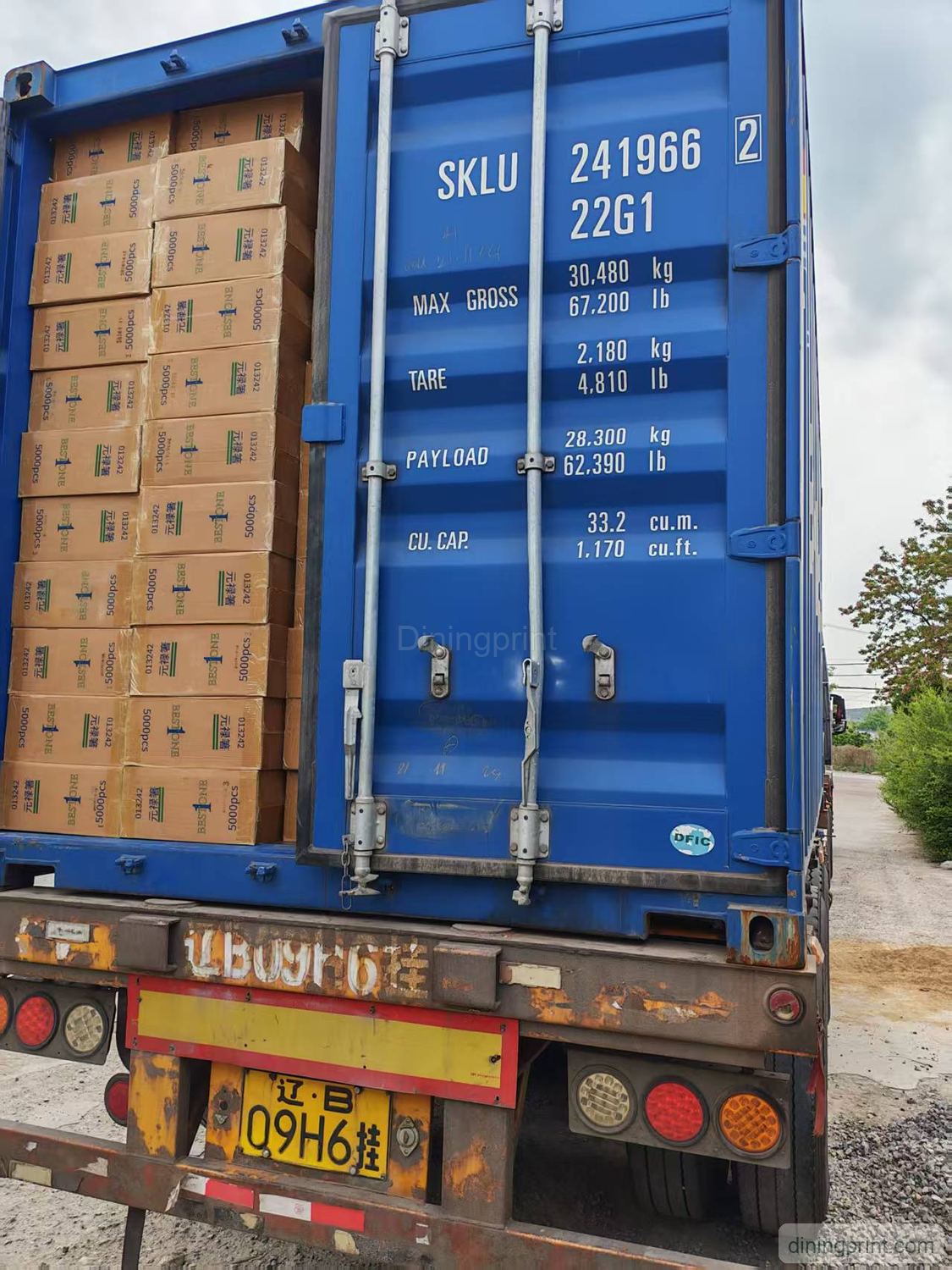
Shipping is usually quoted separately. A standard 20-foot container holds about 1.5–2 million pairs of chopsticks. Sea freight from Dalian or Shanghai to Los Angeles, Sydney, or Hamburg currently runs $1,500–$3,500 per container depending on season.
What’s the minimum order quantity (MOQ)?
Quick answer: Diningprint production MOQ for custom chopsticks starts at 20,000 pairs when you print only the paper sleeve, 50,000 pairs for multi-color sleeves or custom shape, and 100,000+ pairs for fully custom chopsticks (custom wood, length, or shape). Orders below the applicable MOQ are handled as samples rather than production runs.
MOQ depends on how custom you go:
- Standard chopsticks + your logo on the paper sleeve: 20,000 pcs minimum on the sleeve print run. The factory keeps a stock of standard chopsticks and prints only the sleeves.
- Standard chopsticks + custom shape sleeves + multi-color printing: 50,000 pairs minimum.
- Custom chopstick shape, size, or wood + custom packaging: 100,000–200,000 pairs minimum.
If a supplier offers “any quantity, any design,” be cautious. They are likely a trading company sub-contracting to a factory, marking up 15–30% above direct factory pricing.
How long does production take?
| Phase | Timeline |
|---|---|
| Artwork review & PDF proof | 1–3 days |
| Custom printed proof (physical sample with your logo) | 7–10 days |
| Bulk production after PO confirmed | 20–30 days |
| Quality inspection & packing | 3–5 days |
| Sea freight (Asia → US/EU/AU) | 18–35 days |
| Air freight (urgent orders) | 3–7 days |
| Total: PO to your warehouse | 45–75 days (sea) or 30–45 days (air) |
Plan accordingly. Restaurants planning a Q4 holiday menu launch should place orders by mid-August at the latest. New restaurant openings should source chopsticks at least 60 days before grand opening.
Bamboo vs birchwood vs other materials
Most disposable chopsticks fall into one of three material categories:
| Material | Pros | Cons | Best for |
|---|---|---|---|
| Bamboo | Renewable (grows in 3–5 years), strong, light color takes printing well, FSC available | Slightly more expensive than birchwood | Sushi, Japanese, premium positioning |
| Birchwood | Lowest cost, widely available, smooth finish | Slower-growing tree, harder to get FSC | Budget-conscious operations |
| Aspen / poplar | Soft, very light, low cost | Less strong, can splinter | Single-use takeout |
| Reusable / coated | Premium feel, often microwave-safe | Not truly disposable, higher cost | Hotel in-room, premium catering |
For 90% of restaurants, FSC-certified bamboo is the right choice. It balances cost, sustainability story, and printing quality.
For a deep dive on how each wood performs on strength, finish, sustainability, and printing, see our companion guide: Bamboo vs Birchwood vs Aspen: Which Chopstick Wood Is Right for Your Restaurant?
Paper sleeve vs paper wrap vs plastic wrap
These three terms get confused constantly. Here is the difference:
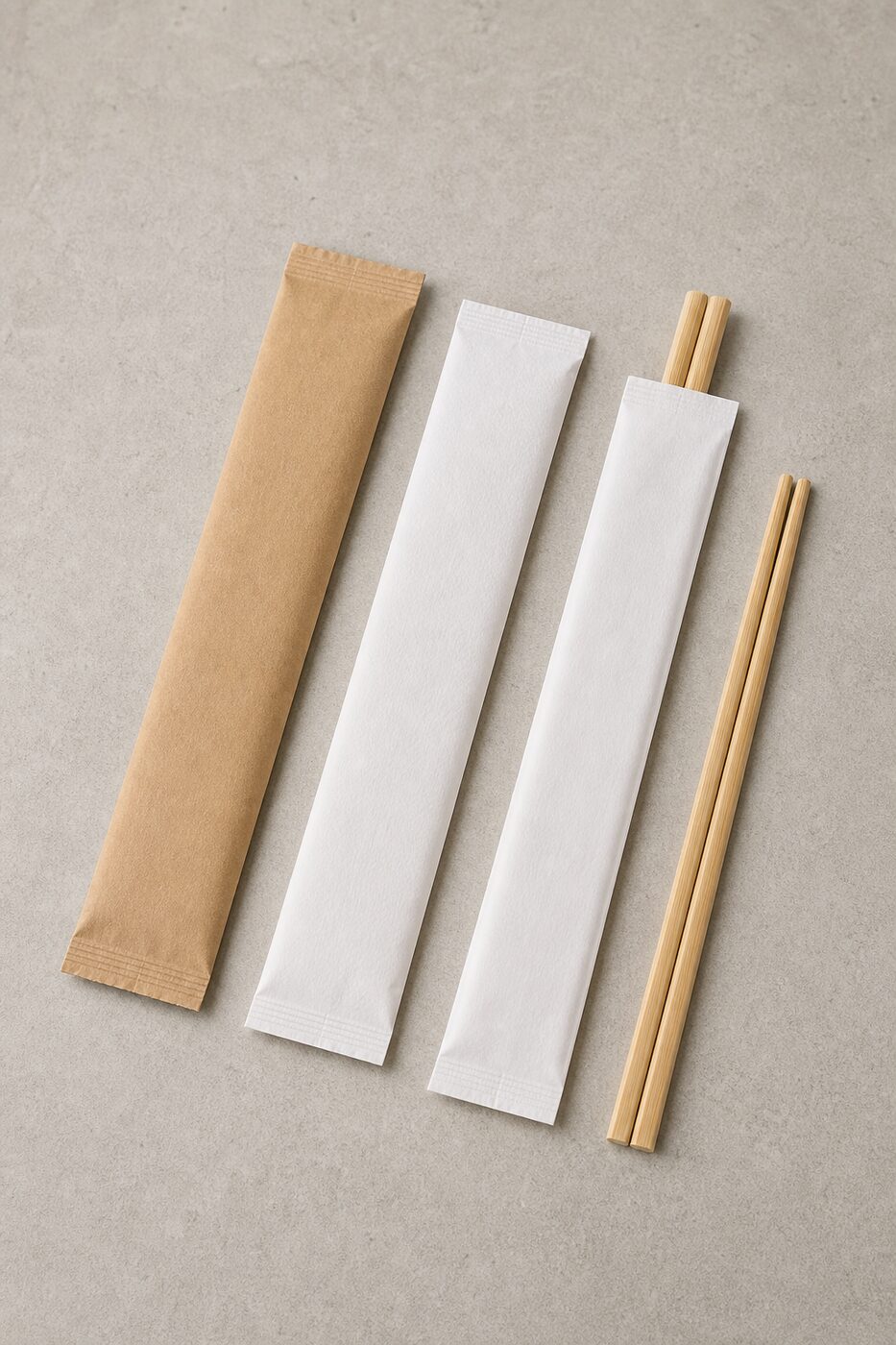
- Paper sleeve (open envelope): An open-ended envelope. Chopsticks slide in and out. Cheapest, widely used. Logo prints on one side.
- Paper wrap (fully sealed): A sealed paper pouch the customer tears open. More hygienic perception. Logo prints on two sides. Slightly more expensive.
- Plastic wrap (sealed): Sealed plastic film. Highest hygiene perception, fully tamper-evident. Most common in airline and hospital catering. Increasingly regulated in EU and some US states due to single-use plastic rules.
Trend in 2026: Paper wrap is replacing plastic wrap in most premium restaurant settings, driven by both regulation and consumer preference.
What does FSC certification actually mean?
FSC (Forest Stewardship Council) certification means the wood or bamboo in your chopsticks comes from sustainably managed forests, tracked through a documented chain of custody.
Why it matters in 2026:
- The EU Deforestation Regulation (EUDR), in effect from December 2024, requires importers to prove their wood products are deforestation-free. FSC documentation is the accepted standard.
- Major Australian and UK supermarket chains (Coles, Woolworths, Tesco, Sainsbury’s) now require FSC chain-of-custody from foodservice suppliers.
- California, New York, and several other US states have introduced or are considering similar requirements.
If your supplier cannot provide their FSC license number (it looks like FSC-C123456) and a current certificate, you have two problems: a sustainability problem and a future-customs problem.
The 10-question supplier checklist
Before signing a PO with any custom chopstick supplier, ask these 10 questions. A real factory answers all of them within 24 hours. A trading company stalls.
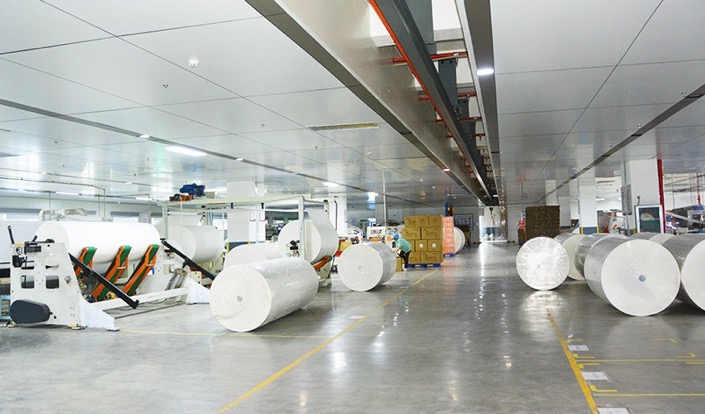
- Are you the factory, or a trading company? Ask for their factory address, photos of their production lines, and ideally a video call walkthrough.
- What is your FSC license number? Cross-check it at info.fsc.org.
- What other certifications do you hold? Look for BSCI (social compliance), FDA (US food contact), BRC (food safety), ISO 9001 (quality management).
- What is your MOQ for my specific configuration? Get this in writing on the proforma invoice.
- What is your lead time, broken down by phase? Proof, production, inspection, shipping — separately.
- Can you send a physical custom proof with my logo before bulk production? This is non-negotiable. If they refuse, walk away.
- What are your payment terms? Standard is 30% deposit on PO, 70% before shipment. Avoid suppliers asking for 100% upfront.
- What Incoterms do you offer? EXW (you arrange shipping), FOB (they deliver to port), CIF (they ship to your port), DDP (they deliver to your warehouse). DDP is easiest for first-time buyers.
- Who handles export documentation? Commercial Invoice, Packing List, Certificate of Origin, FSC chain-of-custody — these are your responsibility if EXW, theirs if DDP.
- What happens if there’s a quality issue? Get the policy in writing before you order, not after.
Red flags to watch for
After helping restaurant buyers source disposable tableware for over 20 years, these are the patterns that almost always end badly:
- Suppliers offering prices 30%+ below market average. There is no magic. They are either substituting cheaper material, skipping certifications, or running an exit scam.
- Refusal to do a video call or send factory photos. A real factory is proud of its production line.
- No clear English communication channel. B2B export requires precise written confirmation of specs. Misunderstandings cost five figures.
- Asking for 100% payment upfront, or payment to a personal account. Legitimate factories always have a corporate USD bank account and accept standard T/T terms.
- No physical sample option. If they can’t send you a printed sample with your logo, they are not equipped for custom work.
- Vague answers about FSC, BSCI, FDA. Either they have it (and can show you the certificate within hours) or they don’t.
Frequently asked questions
Can I order fewer than 20,000 pairs?
For fully custom bulk printing, no — production setup costs make orders below MOQ uneconomical. Diningprint instead offers a free multi-SKU printed sample proof (you pay courier; the one-time plate/tooling setup for your artwork is quoted and confirmed, then credited toward bulk orders) for evaluating print quality before a production order at the applicable MOQ.
Can I print in full color, or only one color?
Full color (CMYK) is technically possible but costs 30–50% more than 1-color printing due to multi-pass press setup. Most restaurants achieve strong branding with 1- or 2-color sleeve designs that incorporate negative space and a single accent color.
Do I need to register a trademark before printing my logo?
You should own the rights to use the logo, but trademark registration is not required for the supplier to print it. The supplier will typically ask you to confirm in writing that you have the rights — this is standard.
How is custom artwork submitted?
Most factories accept vector files (.ai, .eps, .pdf) in CMYK color space. If you only have a raster file (.png, .jpg), expect to either pay a small vectorization fee or get reduced print quality. Online customizer tools (like Diningprint’s chopstick customizer) can help you preview before submitting final artwork.
What’s the difference between “tensogue” and “twin” chopsticks?
- Twin (双生筷 / waribashi): Two halves joined at one end. Customer snaps apart before use. Most common type in Japanese restaurants.
- Tensogue (天削): Square cross-section, slightly tapered, premium feel. Often paired with sushi.
- Round: Smooth, rounded shaft. Common in Chinese and Korean restaurants.
Do I need export licenses or special paperwork to import these?
In most countries, disposable wooden tableware imports require:
- Commercial Invoice and Packing List (your supplier provides)
- Certificate of Origin (your supplier provides on request)
- FSC chain-of-custody documentation (your supplier provides if certified)
- Phytosanitary certificate (for some destinations, e.g. Australia)
- HS Code: typically
4419.90for wooden tableware,4421.99for chopsticks specifically
Your freight forwarder handles the import customs clearance on your end. If your supplier offers DDP terms, they handle all of the above.
What’s the carbon footprint of disposable chopsticks vs reusable?
Lifecycle assessments suggest FSC-certified bamboo disposable chopsticks have a per-use carbon footprint comparable to or lower than reusable plastic chopsticks washed in a commercial dishwasher, when the full water and energy cost of washing is included. Reusable wooden chopsticks have the lowest per-use footprint when used 100+ times.
Next steps for restaurant buyers
If you are sourcing branded chopsticks for the first time:
- Define your specs. Quantity, wood type, length (200mm is standard for adult Asian cuisine, 210–225mm for Western markets), packaging style, color count.
- Get 3 quotes minimum. Use the 10-question checklist above for each supplier.
- Order a custom proof from your top 2 candidates. Spending $200 on proofs saves $20,000 in production mistakes.
- Sign the PO with the supplier that best balances price, communication quality, and certifications — not just the cheapest one.
- Plan for the full 60–75 day timeline from PO to warehouse arrival. Build buffer for first-time orders.
About Diningprint
Diningprint is a custom disposable tableware supplier serving restaurants, cafés, hotels, and food distributors worldwide. We coordinate factory-direct production routes through dedicated partners active in disposable tableware since 2000, with FSC, FDA, BSCI, SGS, and BRC documentation available by product route.
Try our chopstick customizer to preview your logo on real product photography, or request a sample kit to see materials and print quality firsthand.
Last updated: May 2026. Pricing and lead times are indicative and vary by season, configuration, and shipping route. Contact Diningprint for a quote specific to your project.
Quick answers from buyers like you
What is the typical minimum order quantity (MOQ) for custom-printed chopsticks?
Fully custom printed bamboo chopsticks typically start at 20,000 pairs at Diningprint, with the same 20,000-pc MOQ floor applying to paper sleeves, printed napkins, and individually-wrapped cutlery sets. Premium tensogue with full-color wrappers typically starts at 20,000 pairs as well; higher-volume tiers unlock progressive unit-price discounts.
How much do custom chopsticks cost per pair?
Unit cost ranges from $0.008 to $0.025 per pair depending on wood type, length, and packaging. Plain bamboo with a paper sleeve runs $0.008–$0.012; 1-color logo print on the sleeve adds about 25%; full-color print runs $0.015–$0.022; FSC-certified material adds $0.001–$0.003 per pair.
How long is the lead time from order to delivery?
Production typically takes 25–30 days after artwork approval and deposit. Shipping adds 15–30 days by sea or 3–7 days by air. Plan for a 60–75 day total timeline for the first order, faster on repeats.
Do I need FSC certification on my custom chopsticks?
FSC (Forest Stewardship Council) certification is required by most European, Australian, and many U.S. buyers. It proves the wood comes from responsibly managed forests. Without FSC, you may be blocked from some retail buyers, ESG-driven brands, and customs in regions with stricter import rules.
What certifications should a custom chopstick supplier have?
At minimum: FSC (sustainable forestry), FDA (food contact safety, for U.S. shipments), BSCI (social compliance, required by EU retailers), and BRC or SGS (food safety audits). A reputable factory should provide certificates dated within the last 12 months.
Can I get a sample before placing a bulk order?
Yes. At Diningprint the sample itself is free for qualified B2B buyers; you pay the courier. For a branded proof, the one-time plate/tooling setup for your artwork is quoted and confirmed in writing, then credited toward bulk orders. A good supplier will also provide a digital proof (rendering of your logo on real product photography) before any sample production. Samples ship in 7 days.
Are bamboo chopsticks better than birchwood or aspen?
Bamboo is the most common choice — fastest-growing, strong, and renewable. Birchwood is preferred for Japanese-style premium tensogue (smoother finish, lighter color). Aspen is the cheapest option but lower quality. For most restaurants, bamboo offers the best balance of price, look, and sustainability. For a deep dive comparing all three woods, see our dedicated guide on bamboo vs birchwood vs aspen chopsticks.
How can I verify a Chinese chopstick supplier is a real factory, not a middleman?
Three concrete checks separate real factories from layered trading chains. First, ask for a live video tour of the production line (most factories will WeChat or WhatsApp it within a day; a trader rarely can). Second, check whether the contact's email domain and supplier records match the production entity — traders typically use Gmail or QQ. Third, ask three operations-specific questions a trader can't answer in real time: monthly production capacity per SKU, current wood pulp inventory in metric tons, and which printing presses are running today. A real factory answers all three immediately; a trader stalls or pivots to scripted answers. Even a layered supplier can be the right choice if their margin and value-add are transparent — but you should know which one you're buying from before signing a PO.
What's the difference between buying from a factory direct, a trading agent, and a B2B marketplace seller?
Three buyer-supplier configurations exist in the China disposable-tableware export market, each with different cost, MOQ, and quality-control implications. Factory direct: you negotiate with the factory's export team, lowest unit cost but 100% MOQ risk and you handle all QC and compliance paperwork yourself. Trading agent: a B2B specialist holds factory relationships, absorbs MOQ risk, runs pre-shipment QC, and handles FSC/BSCI/FDA documentation — typically 10–20% above factory-direct price. Alibaba-grade marketplace seller: an intermediary with thin margin and limited QC, lowest visibility into the actual factory, highest variance on quality. For US/EU restaurant operators below $5M annual revenue, the trading agent model usually delivers better total-cost economics than going factory-direct or marketplace because of the QC absorption and paperwork handling.
How do disposable cutlery and chopstick manufacturing plant costs translate to my per-piece price?
Northern Chinese disposable-tableware plants are capital-light, labor-intensive operations — typical 200–500-worker facility runs $1.5–4M annual operating cost depending on capacity. Per-piece cost breakdown for custom-printed chopsticks at 20,000-pair MOQ is roughly: 30% raw material (wood pulp or bamboo), 25% labor (cutting, polishing, printing, packing), 15% energy (drying, hot-stamp), 10% overhead (facility, certifications, QC), 10% paper sleeve + ink, 10% factory margin. Trader markup on top adds 10–20%. Freight is separate. The plant-cost variance from one factory to another mostly shows up in wood pulp grade and certification status, not in obvious headline price.
Keep going on related sourcing topics.
Custom Chopstick MOQ Explained: How Much Should You Order for Your First Run?
Entry MOQ is 20,000 pairs. Below that, review a free material or printed sample, not a production run. You pay courier; any artwork plate or tooling setup is quoted separately.
Read article
Best Wood for Chopsticks: Bamboo vs Birch vs Aspen (Buyer's Guide 2026)
A restaurant buyer guide to bamboo, birchwood, and aspen chopsticks: best use cases, cost, MOQ, FSC, print quality, and factory quote paths.
Read article
Hot Stamp vs Offset vs Digital: Custom Chopstick Printing Methods Compared
Hot stamp for premium foil logos. Offset for high-volume full-color sleeves. Digital for proofing and variable artwork. Here's the cost, MOQ, and decision framework for each.
Read article
Custom printed chopsticks and sushi restaurant supplies for wholesale orders.
Start with the items every sushi customer actually touches: bamboo chopsticks, printed chopstick sleeves, napkins, sauce cups, paper bags, and simple takeaway boxes or trays when needed. The tableware does not need to be complicated; the goal is a clean sushi experience with one consistent brand impression.
See guide
Biodegradable cutlery kits and custom tableware for event catering.
Custom wooden cutlery kits, branded chopsticks, and printed napkins for event catering, weddings, festivals, stadium foodservice, and corporate dinners. A 3-piece wooden kit (fork + spoon + knife + napkin in a custom sleeve) starts at a 20,000-kit production MOQ and is priced on request. Lead time is 25-30 days plus freight.
See guide