By Sam Gao, Founder of Diningprint
Disposable Wooden Cutlery Factory Direct: Bulk Pricing, MOQ & Custom Branding
A factory-direct guide to disposable wooden cutlery: bulk forks, knives, spoons, sporks, kit options, MOQ tiers, custom sleeve branding, samples, and 2026 pricing.
- wooden cutlery
- disposable
- bulk
- biodegradable
- FSC
- custom printing
- restaurant supply
- factory direct
TL;DR (the short version)
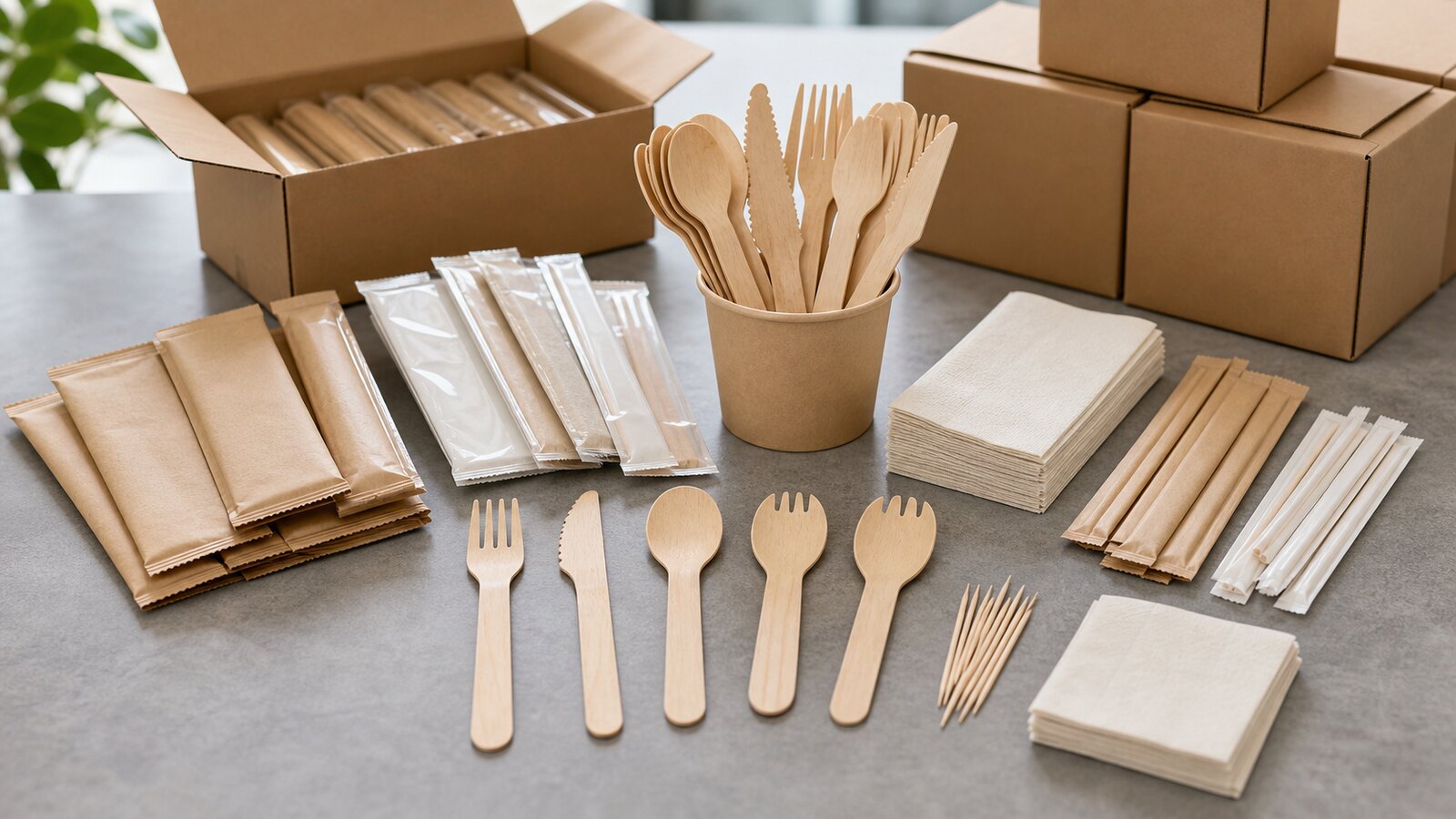
- Disposable wooden cutlery ships in three pieces — forks, spoons, knives — as singles, bagged 2-piece sets (fork + spoon), 3-piece kits (fork + spoon + knife), or 4-piece kits with a folded napkin. Branding goes on the paper sleeve, the handle (hot stamp), or both.
- Production MOQ on custom wooden cutlery typically starts at 50,000 pieces for plain bulk and 20,000 kits for branded sleeves. Orders below the applicable MOQ are handled as samples rather than production runs.
- Unit cost ranges from $0.012 to $0.045 per piece depending on size, wood species, kit configuration, and FSC status.
- FSC-certified birch and bamboo wooden cutlery is the cleanest answer for EU, Australian, and increasingly US buyers — it meets both the "plastic-free" and the "industrially compostable" requirements without the PLA-style end-of-life confusion.
Skip ahead to 2026 bulk-pricing tiers if you already know the configuration you want, or read on for how each version actually gets made.
Factory-direct wooden cutlery vs wholesale cutlery kits
This guide is for buyers comparing bulk disposable wooden cutlery production routes: forks, knives, spoons, sporks, custom sleeves, MOQ tiers, and factory-direct pricing. If your main question is whether you can buy pre-assembled biodegradable cutlery kits wholesale, use the dedicated cutlery kits buying guide; it covers fork + knife + spoon kits, napkin options, wrapper choices, sample approval, and the bulk-order path.
The practical split is simple: this page explains the factory route and cost structure behind the wooden pieces themselves; the kit guide explains how to assemble those pieces into a branded foodservice pack. Keep the two decisions separate and your quote becomes cleaner.
| Buyer need | Best page to use | What the quote should include | Practical starting point |
|---|---|---|---|
| Loose forks, knives, spoons, sporks | This factory-direct wooden cutlery guide | Wood species, size, carton pack, FSC route, MOQ | 50,000 pieces per type |
| Custom sleeve around wooden cutlery | This guide plus the printing-method guide | Wrapper paper, print method, artwork, kit count | 20,000 production MOQ |
| Fork + knife + spoon kit with napkin | Wholesale kits buying guide | Kit contents, wrapper, napkin, branding, assembly | 20,000 branded kits / 50,000 plain bulk |
| Eco claim or compostable wording | Green claims guide | Destination market, wording, certificate route | Confirm before printing |
For a closer comparison of wood vs plastic and PLA options, see the material comparison guide. For claim wording, check compostable vs biodegradable vs recyclable before printing the sleeve.
Choose your wooden cutlery format by service style
| Service style | Recommended format | Brand surface | MOQ logic |
|---|---|---|---|
| Event catering and weddings | 3-piece kit + napkin | Printed paper sleeve or napkin band. | Best first branded order at 20,000 kits. |
| Ghost kitchens and delivery bowls | Fork + spoon set | Wrapper front with logo, QR, or reorder prompt. | Keep the kit simple; add napkin after reorder volume proves out. |
| Coffee shops and bakeries | Small spoon, stirrer, or tasting fork | Hot stamp on handle or printed sleeve for paired kits. | Size and handle print area drive MOQ more than material. |
| Hotels, premium events, retail packs | FSC bamboo or birchwood kit | Custom wrapper plus optional hot-stamped handle. | Budget for sample approval and certification documents. |
The fastest quote path is to send the meal type, exact pieces in the kit, wrapper preference, logo file, quantity, and destination market. We will confirm the sample-approval path and the applicable production MOQ. Sushi and Asian takeout operators can start from custom chopsticks and cutlery for sushi restaurants, or request a quote once the kit is set.
What proof should you request before bulk wooden cutlery production?
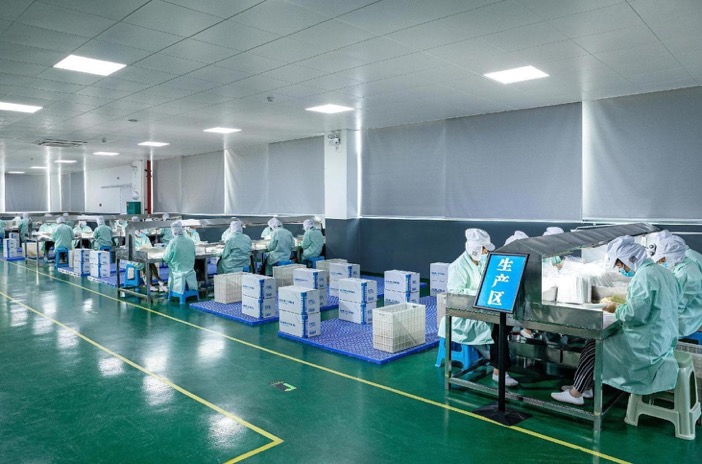
For custom wooden cutlery, the useful buyer proof is not a factory-floor video. Ask for a dieline, a pre-production sample, and a packing checklist that confirms the exact spoon, fork, knife, napkin, wrapper, carton count, and destination-market document route before bulk production starts.
What "disposable wooden cutlery" actually means at the factory
Most "disposable wooden cutlery" orders we ship are one of these five configurations — and each has a different MOQ, unit cost, and lead time. Knowing which one you actually want is the first conversation worth having before asking for a quote.
| Configuration | What it is | Typical MOQ | Unit cost |
|---|---|---|---|
| Plain bulk cutlery | Loose forks, spoons, or knives in a cardboard carton. No sleeve, no logo, no kit. The cheapest entry point. | 50,000 pieces (per type) | $0.012 – $0.018 |
| Bagged 2-piece set | Fork + spoon in a clear poly bag. Standard at sushi takeout, salad bowls, fast casual. | 30,000 sets | $0.020 – $0.030 |
| 3-piece kit with napkin | Fork + spoon + knife + folded paper napkin in a printed paper or poly sleeve. The workhorse for event catering and hotel breakfast service. | 20,000 kits | $0.025 – $0.040 |
| Branded printed sleeve | Your logo or full-color artwork offset-printed on the sleeve that holds the cutlery. Where branded eco-cutlery becomes a brand impression rather than a commodity. | 20,000 sleeves | +$0.005 – $0.010 over base |
| Hot-stamped handle | Metallic gold/silver logo pressed directly into the wood handle. Premium look used at hotel banquets, gifting, and luxury catering. | 30,000 pieces | +$0.004 – $0.008 over base |
Most first-time orders we ship are the bagged 2-piece set or the 3-piece kit with napkin — the cutlery itself is a commodity, but the sleeve, the kit composition, and the branding are where buyers actually compete on customer experience.
How much does bulk wooden cutlery cost?
Quick answer: Factory-direct per-piece cost ranges $0.012 to $0.045. Plain bulk wooden cutlery starts at 50,000 pieces, while custom-printed sleeve kits start at 20,000 kits. Below the applicable MOQ, Diningprint offers samples rather than production runs.
Pricing is driven by three things: wood species and size, kit configuration, and order volume. Here is the honest 2026 range, factory-direct:
| Configuration | Unit cost (USD) | MOQ |
|---|---|---|
| Plain bulk birchwood spoon (140 mm) | $0.012 – $0.016 | 50,000 pieces |
| Plain bulk birchwood fork (160 mm) | $0.013 – $0.018 | 50,000 pieces |
| Plain bulk birchwood knife (160 mm) | $0.014 – $0.020 | 50,000 pieces |
| FSC-certified bamboo fork/spoon set | $0.022 – $0.030 | 30,000 sets |
| 3-piece kit + folded napkin in plain sleeve | $0.025 – $0.035 | 20,000 kits |
| 3-piece kit + napkin in custom-printed sleeve | $0.030 – $0.045 | 20,000 kits |
| Premium hot-stamped logo on handle | +$0.004 – $0.008 | 30,000 pieces |
| Printed sample for artwork approval | Quoted as a sample | Not a production order |
Add $0.001 – $0.003 per piece for FSC-certified material, which most European and Australian buyers now require. Plate and die set-up for offset and hot-stamp printing run $80 – $300 per design and amortise quickly above ~30,000 pieces — see our printing methods comparison (the same logic applies to cutlery handles and sleeves).
Shipping is quoted separately. A standard 20-foot container holds about 1.0 – 1.2 million pieces of wooden cutlery; sea freight to most major ports currently runs $1,500 – $3,500 per container depending on lane and season.
Biodegradable cutlery: what the term actually means (and what it doesn't)
"Biodegradable cutlery" is one of the most over-promised terms in foodservice procurement. Three things buyers should know before quoting:
- Wooden cutlery (birch, bamboo, aspen) is naturally biodegradable. No certification sticker is required for the material itself to break down. Untreated wood decomposes in home compost in 6 – 12 months and in industrial compost in 8 – 12 weeks.
- "Biodegradable" does not equal "compostable". Compostable means it breaks down within a specified time in a specified facility (ASTM D6400 / EN 13432). Many PLA-style "biodegradable" plastic cutleries are only industrially compostable — they will not break down in a backyard pile, the ocean, or a landfill within useful time. Untreated wood does not have this distinction.
- Surface treatments matter. A wooden spoon polished with paraffin wax for shelf-life gloss, or treated with industrial preservatives for warehouse durability, is no longer cleanly compostable. Quality factories phase those treatments out. Ask your supplier what is on the surface.
The buyer-side practical answer: FSC-certified, untreated birch or bamboo wooden cutlery meets every common European, Australian, and US foodservice compostability requirement without the PLA-style end-of-life confusion. It is also the format we ship most often to retail-facing brands that need a single sustainability story their customers can verify.
Custom-printed wooden cutlery: sleeves, kits, and hot stamp
Three places brand work actually happens on wooden cutlery:
- The paper sleeve / kit wrapper. By far the highest-impact and lowest-cost branding surface. Offset CMYK or digital printing on the paper that wraps the cutlery kit (and the folded napkin, if any) gives full-color artwork without changing the underlying utensil tooling. This is where most "custom wooden cutlery" buyers should start.
- Hot stamp on the handle. Metallic gold, silver, or copper foil pressed directly into the wood. Premium look, sleeve-free, used at hotel banquets and luxury catering. MOQ ~30,000 pieces.
- Laser engraving on the handle. Logo or short text burned into the wood, no foil. Subtler than hot stamp, fully sleeve-free, popular for wedding favors and corporate gifting.
For high-volume runs where photo-quality CMYK on the sleeve matters, offset is the cost winner above 50,000 kits. Digital printing carries no plate cost and is useful for proofing, but Diningprint production still begins at the applicable product MOQ — the same economics covered for chopsticks in our custom chopsticks formats guide.
Set configurations: which kit ships the most volume?
Over the last twelve months, the four configurations we ship the most:
- 3-piece (fork + spoon + knife) + napkin in printed sleeve — the catering and event-foodservice standard. Used at weekday lunch buffets, ghost-kitchen meal kits, and outdoor festival vendors.
- 2-piece (fork + spoon) bagged — sushi takeout, salad bowls, fast casual, hotel grab-and-go. No knife reduces unit cost and packaging complexity.
- 3-piece + napkin + salt / pepper sachet — long-haul airline catering and premium meal-kit services. Highest unit cost, highest perceived quality.
- 1-piece (spoon only) bagged — yogurt cups, soup containers, dessert bars. The simplest and cheapest configuration.
For most first-time custom wooden cutlery orders, the 3-piece printed-sleeve kit is the safest specification: it ships well, accepts strong branding, and is the format most end-customers expect at the table.
Why "direct from the factory" matters for wooden cutlery
The disintermediation math on wooden cutlery is the same as on chopsticks — every layer between you and the production line adds 10 – 25% on top of factory pricing. A Western buyer ordering through a multi-layer trading chain typically pays 30 – 60% above direct factory cost (see our four-layer sourcing chain breakdown).
Three additional reasons direct-from-factory matters specifically for wooden cutlery:
- Wood-batch traceability. Cutlery follows the same seasonal-pulp rules as chopsticks. Spring stock from pre-summer pulp produces the cleanest finish and the lowest odor risk. Only a factory-direct seller can reserve a specific production window for odor-sensitive SKUs.
- Kit-composition control. Mid-chain trading companies often standardise kit content to simplify pooled orders. If you need a specific napkin size, sleeve material, or salt / pepper sachet variant, the change order needs to reach the production line directly — every intermediate layer slows it down.
- FSC chain-of-custody. FSC certificates name the manufacturing entity. If your printed sleeve markets "FSC-certified" but your compliance documentation names a trading intermediary instead of the factory, an EU or Australian retail audit will flag it.
How to get a wooden cutlery proof before committing to volume
If the buyer asks for a pre-assembled biodegradable kit rather than loose forks, knives, and spoons, start with the biodegradable cutlery kits wholesale guide. It covers the kit configurations, wrapper choices, and MOQ logic that sit one layer above loose wooden cutlery.
Three ways to test before placing a full PO:
- Online configurator. Preview your logo on cutlery sleeve and kit artwork at the customizer. Saves the design as a downloadable PDF you can share with your team.
- Printed sample proof. Free sample, ships in 5 – 10 days (you pay courier). Includes plain birchwood cutlery, a printed-sleeve kit, and a Pantone color chart so brand colors land on first try.
- Printed sample approval. Review the wrapper artwork on real materials before placing the full production PO.
About Diningprint
Diningprint is a B2B factory-direct coordination brand supplying custom-printed disposable tableware to restaurants, cafés, food brands, hotels, and event caterers worldwide. Through dedicated production partners, we coordinate wood preparation, sleeve printing, hot stamping, engraving, kit packing, and batch-level FSC documentation so buyers can quote factory-direct and validate real samples before bulk production. See the catalogue, preview your logo at the customizer, or order the printed sample kit.
Industry context in this post is based on Diningprint's direct production experience and an anonymized 20-year veteran Northern China factory director's account. Prices and MOQs are typical 2026 ranges; final quotes vary with artwork complexity, FSC status, kit composition, and freight market conditions.
Quick answers from buyers like you
When should you buy loose wooden cutlery instead of pre-assembled kits?
Buy loose wooden cutlery when you are a distributor, foodservice supplier, or large venue that already packs its own sets locally. Buy pre-assembled kits when the buyer wants fork + knife + spoon, napkin, toothpick, or wrapper branding packed at the factory. For the kit-specific path, use the biodegradable cutlery kits wholesale guide; this page focuses on the factory-direct wooden pieces, MOQ tiers, and custom branding surfaces.
What is the MOQ for custom wooden cutlery?
For custom-printed paper sleeves around wooden cutlery kits, Diningprint production MOQ starts at 20,000 kits for 1- or 2-color artwork and 50,000 kits for full-color CMYK. Plain bulk wooden cutlery (no sleeve, no branding) starts at 50,000 pieces per type. Below the applicable MOQ, we offer samples rather than production runs.
Is disposable wooden cutlery biodegradable?
Yes. Untreated birch, bamboo, and aspen wooden cutlery is naturally biodegradable — no certification sticker is required for the material itself to break down. Decomposition is 6–12 months in home compost and 8–12 weeks in industrial compost. The caveat: surface treatments like paraffin wax polish or industrial preservatives can slow biodegradation. Quality factories phase those out; ask your supplier what's on the surface.
What's the difference between biodegradable and compostable wooden cutlery?
Biodegradable simply means it breaks down naturally over time. Compostable is a stricter, certified claim — it breaks down within a specified time in a specified facility (ASTM D6400 in the US, EN 13432 in the EU). Untreated wooden cutlery is both biodegradable AND compostable in industrial conditions without needing certification of the material itself. Many PLA-style 'biodegradable' plastic cutleries are only industrially compostable, which is why retail audits increasingly prefer FSC wood over PLA.
Can wooden cutlery be FSC certified?
Yes. FSC certification covers the wood source (sustainably managed forest) and the chain of custody from forest to factory. FSC-certified birchwood and FSC-certified bamboo are both widely available. We typically ship FSC-certified cutlery to European, Australian, and US retail-facing brands; expect a $0.001–$0.003 per-piece premium versus uncertified material.
Can you print custom logos on wooden cutlery?
Yes, in three places: (1) on the paper sleeve that wraps the kit — offset CMYK, hot-stamp foil, or digital, full color, lowest cost; (2) hot-stamped metallic foil directly on the wood handle — premium, ~30,000-piece MOQ; (3) laser-engraved into the handle wood — permanent, sleeve-free, ideal for wedding favors and corporate gifting. Most first-time buyers start with the printed sleeve.
What sizes do wooden forks and spoons come in?
Standard birchwood disposable cutlery sizes: spoon 140 mm, fork 160 mm, knife 160 mm. Tea / dessert spoons run smaller (110–120 mm). Premium long-handle sets go to 180 mm for soup or stir-friendly use. Custom sizes outside these defaults are available but typically need a 100,000+ piece MOQ to justify the tooling change.
Is wooden cutlery safe for hot food?
Yes, when properly produced. Quality wooden cutlery is steamed at high temperature for 10+ hours during manufacturing, which sterilizes it and earns FDA, LFGB, and equivalent food-contact compliance for hot and cold service. Avoid any wooden cutlery that hasn't been heat-treated; it can splinter or transfer wood flavor in hot foods like soups and pasta.
Do you make wooden cutlery sets for events, weddings, and catering?
Yes — event and wedding catering is one of our largest segments. The most popular configuration is a 3-piece kit (fork + spoon + knife) plus a folded paper napkin in a printed paper sleeve. Laser-engraved event cutlery is available at its applicable production MOQ; samples can be approved before the production PO. Lead time is typically 25–30 days production plus freight.
Are wooden cutlery sets cheaper in bulk?
Yes, significantly. Per-piece costs typically fall as production moves from the 20,000-kit entry MOQ toward offset runs above 100,000 kits. The exact break-even point depends on artwork, color count, wrapper material, packing, and destination, so the written quote should compare the applicable production tiers.
Keep going on related sourcing topics.
Biodegradable Cutlery Kits Wholesale: MOQ, Configs & Factory-Direct Pricing (2026)
Yes, you can buy biodegradable cutlery kits wholesale — FSC wood and bamboo fork/knife/spoon sets from 20,000 branded kits or 50,000 plain pieces. Here's how the configuration, wrapper, sample approval, and branding shape a factory-direct order.
Read article
Custom Printed & Engraved Chopsticks for Restaurants | Bulk Factory Pricing
Choose printed sleeves or engraving for restaurant chopsticks, with real MOQ, sample proofing, bulk pricing, and a factory-direct quote path.
Read article
Custom Chopstick Sleeve Printing: From Dieline to Pre-Production Sample
A sample-first workflow for restaurant buyers ordering custom chopstick sleeves: lock the dieline, approve the proof, test the pre-production sample, then move to bulk production.
Read article
Hot Stamp vs Offset vs Digital: Custom Chopstick Printing Methods Compared
Hot stamp for premium foil logos. Offset for high-volume full-color sleeves. Digital for proofing and variable artwork. Here's the cost, MOQ, and decision framework for each.
Read article
The 4-Layer China Supply Chain for Disposable Tableware: What Importers Don't See
Most Western buyers think they're 1-2 hops from the factory. For Northern Chinese wood and bamboo disposables, the reality is usually four. Here's how the structure inflates wholesale prices 60-80% — and three questions that detect it in 30 seconds.
Read article
Biodegradable cutlery kits and custom tableware for event catering.
Custom wooden cutlery kits, branded chopsticks, and printed napkins for event catering, weddings, festivals, stadium foodservice, and corporate dinners. A 3-piece wooden kit (fork + spoon + knife + napkin in a custom sleeve) starts at a 20,000-kit production MOQ and is priced on request. Lead time is 25-30 days plus freight.
See guide
Branded takeout packaging for ghost kitchens.
Custom-printed disposable tableware for ghost kitchens, virtual brands, and delivery-first restaurant groups — branded chopstick sleeves, wooden cutlery kits, and printed paper napkins. Production starts at 20,000 kits for eligible branded configurations, with per-kit pricing on request. The packaging that arrives at the customer's door is your only brand surface — we make it count.
See guide
Custom printed chopsticks and sushi restaurant supplies for wholesale orders.
Start with the items every sushi customer actually touches: bamboo chopsticks, printed chopstick sleeves, napkins, sauce cups, paper bags, and simple takeaway boxes or trays when needed. The tableware does not need to be complicated; the goal is a clean sushi experience with one consistent brand impression.
See guide