By Sam Gao, Founder of Diningprint
The 4-Layer China Supply Chain for Disposable Tableware: What Importers Don't See
Most Western buyers think they're 1-2 hops from the factory. For Northern Chinese wood and bamboo disposables, the reality is usually four. Here's how the structure inflates wholesale prices 60-80% — and three questions that detect it in 30 seconds.
- supply chain
- china sourcing
- disposable tableware
- procurement
- wholesale
- B2B
- import
Quick answers from buyers like you
How many layers are typically between a Western buyer and a Chinese disposable tableware factory?
For wood and bamboo disposables produced in Northern China, the typical chain is four layers: Western buyer → Southern Chinese trading company → Northern Chinese regional dealer → Northern Chinese factory. Each layer captures 10-25% margin, stacking to a typical 60-80% markup over the factory-gate price.
Why don't Northern Chinese factories sell directly to Western buyers?
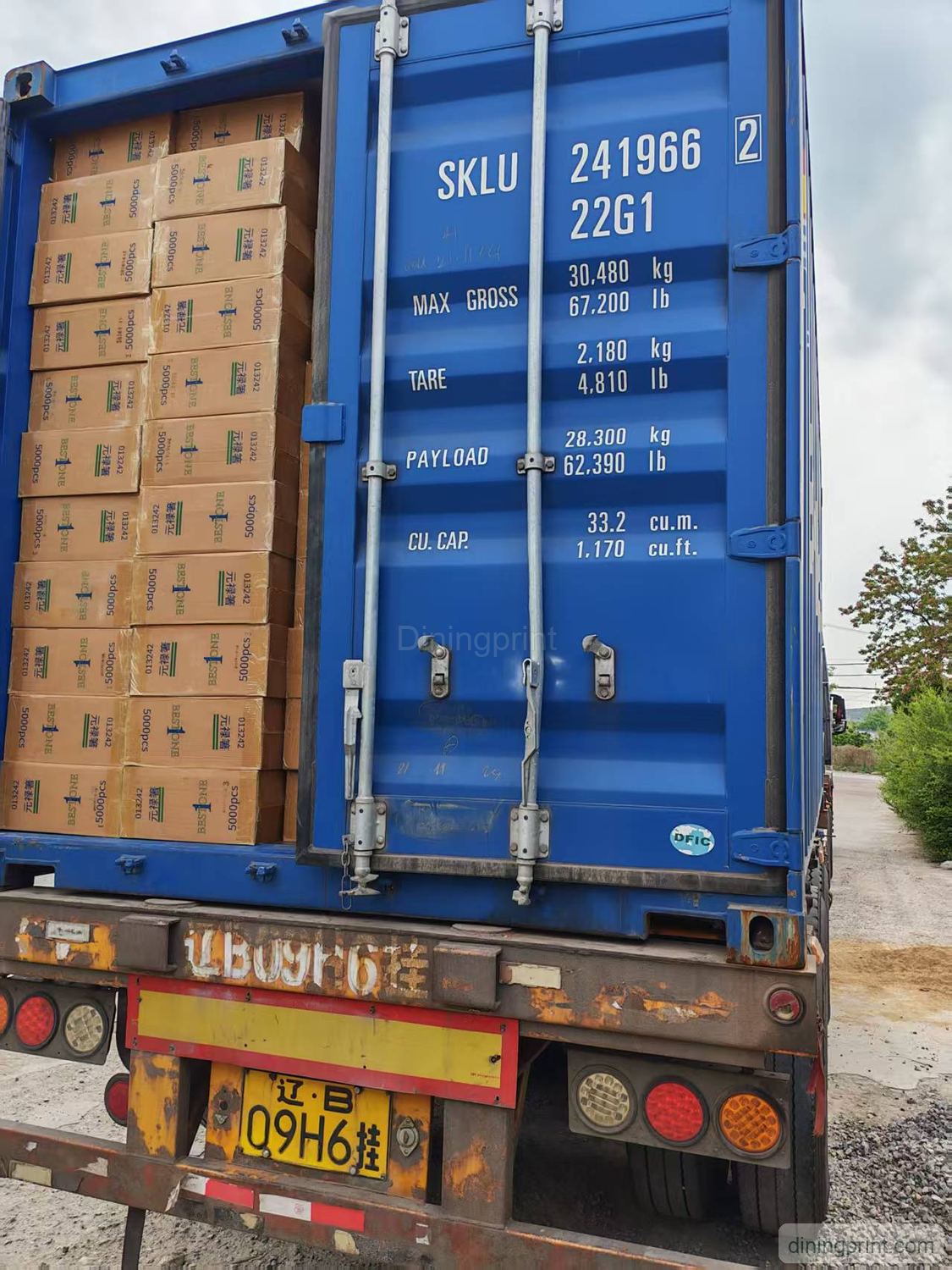
Most Northern Chinese disposable tableware factories are family-owned operations of 50-150 workers running on thin single-digit margins. They have historically reinvested in equipment rather than English-language sales teams or international SEO. The result: Western buyers don't find them on Google. They reach the factory through Southern trading companies that have the export infrastructure and English-language sales presence.
How much does the multi-layer markup typically add to wholesale disposable tableware prices?
For a printed bamboo chopstick at $0.005 factory gate, a typical 4-layer chain adds 60-80% by the time the order lands with a Western buyer — bringing the price to $0.008-0.009 per pair. Lower-margin commodity products (plain wooden cutlery) carry less stacking; higher-touch custom-printed runs with low MOQ carry more.
How can I verify whether my Chinese supplier is the actual factory?
Three questions detect layer count quickly: (1) Which province is your factory in, and can you send a photo of the gate signage? (2) Can I do a 15-minute video call with the production line manager during the next shift? (3) What's your factory's production calendar — specifically, when is the summer maintenance shutdown and how does it affect lead time? A factory-direct seller answers all three within a business day; a multi-layer trading chain deflects each one.
What are the trade-offs of sourcing one layer up the supply chain?
Going direct saves 60-80% in layer markup but adds operational load on your side: more communication overhead (Mandarin capability helpful), tighter payment terms (30% T/T deposit + 70% before shipment is typical, vs. L/C or 30/60/90 terms from trading companies), and a longer initial qualification period to verify the factory is legitimate. For sub-MOQ pilot runs, a trading company's batch aggregation may still add value.
Why are inspection costs higher with multi-layer suppliers?
When the trading company is based in Southern China (Shenzhen, Yiwu, Guangzhou) and the factory is in Northern China (Liaoning, Jilin), the QC team flies 1,500 km north for each production batch. The fixed cost of an inspection trip is the same whether your order is 20,000 pairs or 200,000 pairs, so the per-pair inspection burden is dramatically higher on small orders. Factory-direct sourcing eliminates this cross-country travel by allowing in-line QC where the production runs.
Are Alibaba listings from Chinese disposable tableware sellers usually direct factories?
In most categories, no. Alibaba's top-ranked listings for 'custom chopsticks wholesale' or 'disposable cutlery China' are dominated by Southern Chinese trading companies that aggregate spec requests across many buyers and place pooled orders with Northern factories. Some listings are genuine factory listings — usually identifiable by older account age, consistent factory-floor photos across product categories, and supplier records that match a Northern production base.
Keep going on related sourcing topics.
How to Choose a Custom Chopstick Supplier: 2026 Restaurant Owner's Guide
MOQ, real unit costs, lead times, FSC compliance, and the 10 questions every restaurant buyer should ask a chopstick factory before signing a PO.
Read article
How to Choose a Custom Chopstick Supplier: 2026 Restaurant Owner's Guide
MOQ, real unit costs, lead times, FSC compliance, and the 10 questions every restaurant buyer should ask a chopstick factory before signing a PO.
Read article
Custom Chopstick MOQ Explained: How Much Should You Order for Your First Run?
Real entry MOQ is 20,000 pairs. Below that, you have a free sample, a $49 printed kit, and low-minimum custom quote routes. Here's how to pick the right one for your first order.
Read article
Custom sushi restaurant supplies for daily service and takeaway.
Start with the items every sushi customer actually touches: bamboo chopsticks, printed chopstick sleeves, napkins, sauce cups, paper bags, and simple takeaway boxes or trays when needed. The tableware does not need to be complicated; the goal is a clean sushi experience with one consistent brand impression.
See guide
Custom branded coffee shop packaging and cutlery, factory direct.
Build one coffee shop supply kit around the items customers actually carry: printed cups, cup sleeves, napkins, wooden stirrers, paper bags, and pastry boxes. Start with lower-MOQ sleeves, napkins, or stirrers, then scale to cups and multi-SKU repeat orders once the artwork is proven.
See guide
Biodegradable cutlery kits and custom tableware for event catering.
Custom wooden cutlery kits, branded chopsticks, and printed napkins for event catering, weddings, festivals, stadium foodservice, and corporate dinners. 3-piece wooden kit (fork + spoon + knife + napkin in custom sleeve), MOQ 5,000 (digital) or 20,000 (offset), priced on request. Lead time 25-30 days plus freight.
See guide
Branded takeout packaging for ghost kitchens.
Custom-printed disposable tableware for ghost kitchens, virtual brands, and delivery-first restaurant groups — branded chopstick sleeves, wooden cutlery kits, and printed paper napkins. MOQ from 5,000 kits (digital) or 20,000 kits (offset), with per-kit pricing on request. The packaging that arrives at the customer's door is your only brand surface — we make it count.
See guide