By Sam Gao, Founder of Diningprint
Why Disposable Wood Chopsticks Sometimes Smell — and the Seasonal Production Secret Behind It
A faint sweet-sour smell in disposable wood chopsticks almost always traces back to production month, not storage. Northern Chinese factories halt production July-September for a reason — here's the seasonal quality calendar and the best time to order.
- disposable chopsticks
- wood quality
- seasonal production
- procurement
- odor
- QC
- china sourcing
- B2B
TL;DR (the short version)
- Northern Chinese wood factories halt disposable-chopstick and cutlery production every July, August, and September — not for holidays, but because wood pulp held over a Northern Chinese summer goes through sugar degradation that leaves a faint sweet-sour odor in anything produced from it.
- The quality-grade production window is March to June (pre-summer pulp, freshest). Autumn production (October–November) carries the highest odor risk because it runs on pulp that just sat through the heat.
- "Why do my disposable chopsticks smell?" almost always traces back to production month, not storage or the wood species.
- A quality supplier knows their production calendar cold and will prioritise pre-June stock for odor-sensitive buyers. A reseller three layers from the factory usually can't answer the question at all.
Why do disposable wood chopsticks sometimes smell?
Quick answer: Disposable wood chopsticks develop a sweet-sour odor when produced from pulp that sat in a Northern Chinese factory warehouse through a hot, humid summer. Residual sugars in the wood break down (a slow fermentation-like process) and the resulting smell survives wrapping and shipping. The fix is production timing: insist on pre-June production, or autumn stock made from cold-stored pulp. Storage at the buyer end is the second-line defense, not the primary cause.
It's one of the most common quiet complaints in foodservice procurement: a shipment of disposable wood chopsticks arrives, and a few weeks in, staff or customers notice a faint smell — described variously as "sweet", "sour", "papery", "fermented", or just "off". The instinct is to blame storage, humidity, or the wood itself. The real cause is almost always when the wood was processed.
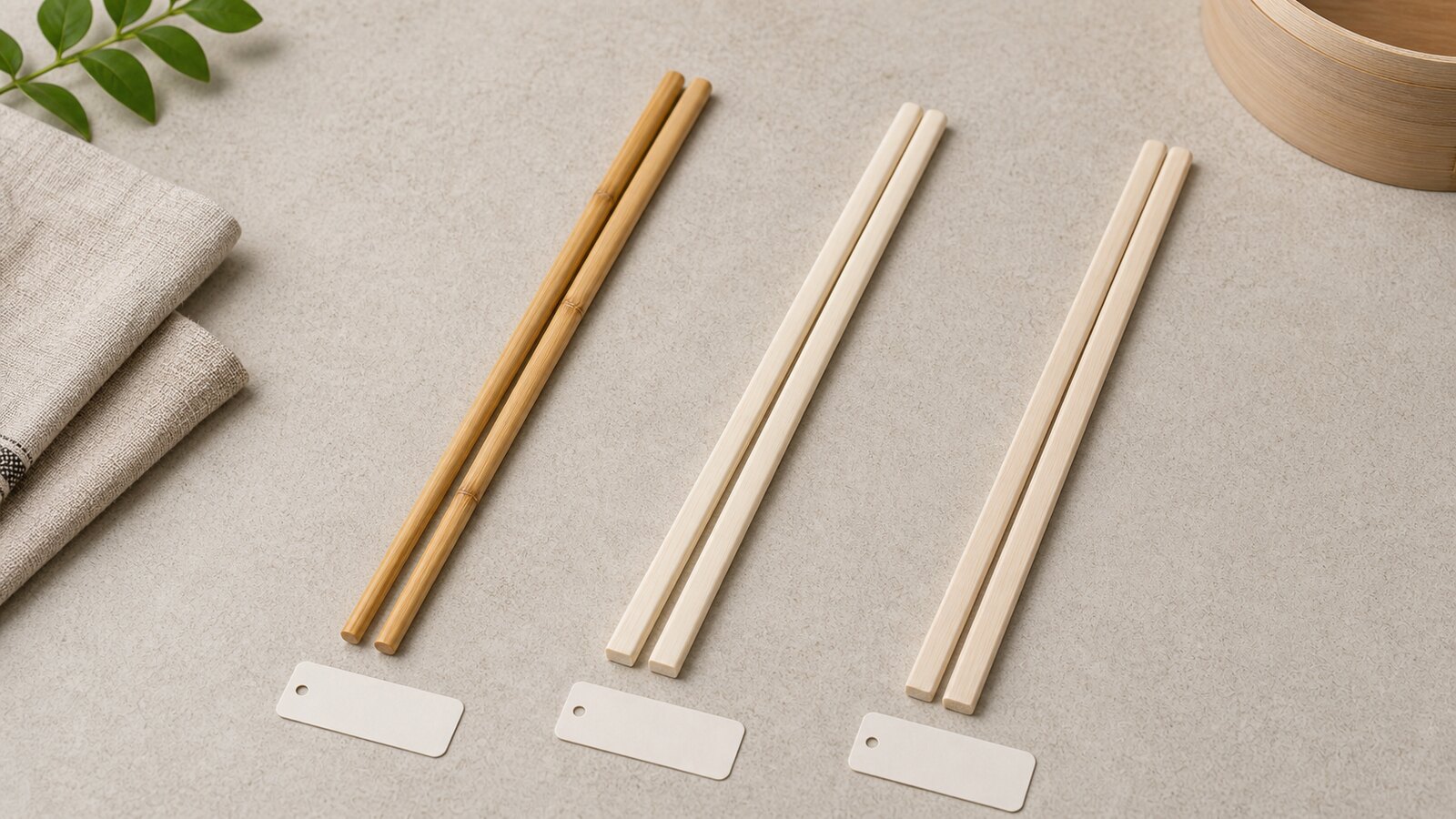
Disposable chopsticks, wooden cutlery, coffee stirrers, and ice cream sticks are cut from kiln-processed wood — usually birch (Betula platyphylla), poplar, or bamboo. Before cutting, the raw stock is steamed at high temperature for 10+ hours, which sterilises it and is what earns FDA, LFGB, and equivalent food-contact compliance.
But wood is an organic material that still contains natural sugars and moisture. Held in a Northern Chinese factory warehouse through a hot, humid summer, that residual sugar begins to break down — a slow fermentation-like process. Stock produced from pulp that has gone through this summer cycle carries a detectable odor that survives wrapping and shipping. By the time it reaches an end customer's hand, it's noticeable.
External context and Diningprint source note
For wood behavior, the most useful public reference is the USDA Forest Products Laboratory Wood Handbook, especially the sections on moisture relations and physical properties. For food-contact documentation, FDA's Packaging & Food Contact Substances page explains how food-contact substances are regulated in the US. The production-calendar guidance here comes from Diningprint quote-book notes and anonymized partner-factory interviews from 2024–2026.
The Northern China seasonal production calendar
This is why serious Northern Chinese wood factories run an annual calendar that most buyers never see:
| Window | Production status | Quality grade | Why |
|---|---|---|---|
| March – June | Peak production | Premium | Pre-summer pulp, freshest, lowest odor risk. Best window for odor-sensitive orders. |
| July – September | Shutdown / maintenance | — | Heat + humidity make fresh production risky. Factories overhaul equipment instead. |
| October – November | Resumes | Watch closely | Runs on pulp that just sat through summer — highest sugar-degradation odor risk. |
| December – February | Steady production | Acceptable | Cold storage stabilises pulp; odor risk drops again. |
A 20-year veteran former factory director (anonymized at his request) put it simply: "We stop in July, August, September every year. People think it's the summer holiday. It's the wood. If you cut and ship in autumn from pulp that sweated all summer, the customer complains about the smell. So good factories ship the spring stock to the picky buyers and keep the autumn runs for the ones who only look at price."
When is the best time to order wood chopsticks from China?
If odor and finish quality matter for your brand — sushi bars, premium takeout, hotel dining, anything where the customer puts the chopstick to their mouth and notices — the answer is:
- Place orders so production lands in the March–June window. Working backwards from a 25–35 day production cycle plus 15–30 days sea freight, that means ordering between February and May for pre-summer production.
- Avoid accepting October–November production runs unless your supplier can confirm the stock was made from pre-summer pulp held in cold storage.
- For year-round needs, ask your supplier to reserve spring-production stock for your odor-sensitive SKUs and use later-window stock for less sensitive items (bundled buffet chopsticks, back-of-house stir sticks).
This is the kind of thing that separates a factory-direct relationship from a multi-layer trading chain. A factory knows its own calendar. A trading company three layers up often ships whatever pooled stock it has, commingled across production months, and can't tell you when any given batch was made.
Does this affect bamboo chopsticks too?
Bamboo behaves differently. Bamboo is technically a grass, not a wood, and has a different sugar and moisture profile — it's less prone to the summer sugar-degradation odor than birch or poplar. That's one reason bamboo dominates the disposable-chopstick category (the others are cost, strength, and renewable FSC supply — see our bamboo vs birchwood vs aspen guide).
But bamboo has its own seasonal and processing risks. Cheaper bamboo production historically used industrial-grade preservatives or paraffin-wax polishing to extend shelf life and improve surface gloss — practices that were common in the 2010s before the serious manufacturers moved off them. If you're sourcing bamboo, the question shifts from "what month?" to "what's your preservative and finishing process?" Either way, the principle holds: ask about process, not just price.
How to tell if your supplier actually knows their production calendar
You can test this in one email. Ask your disposable-tableware supplier:
- "What month was this batch produced, and from which season's pulp?" A factory-direct seller answers specifically. A reseller goes vague or quotes a generic "fresh stock".
- "Do you halt wood production in summer? When does your line restart?" A real Northern wood factory confirms the July–September shutdown without hesitation. A trading company often doesn't know it happens.
- "Can you reserve spring-production stock for my odor-sensitive order?" A factory can plan around its own calendar. A multi-layer chain can't make that commitment because it doesn't control production timing.
If a supplier ships year-round at one undifferentiated price tier and can't speak to production month, you're either getting commingled batches or your supplier simply hasn't traced their own complaint history back to the seasonal cause.
Do disposable wood chopsticks expire? What's the real shelf life?
Disposable wood and bamboo chopsticks don't have a hard expiry date the way food does, but they do have a practical quality shelf life. Properly steamed, dried, and wrapped chopsticks from a good production batch stay usable for 3–5 years if kept sealed, dry, and out of direct sunlight. The limiting factors are:
- Moisture re-absorption — wood is hygroscopic. Chopsticks stored in a humid environment slowly reabsorb moisture, which can encourage mold on the surface and accelerate any latent odor. This is separate from the production-month sugar-degradation issue, but compounds it.
- Print and wrapper aging — the custom logo on a paper sleeve fades and the wrapper yellows long before the wood itself fails. For branded chopsticks, the sleeve usually ages out before the chopstick does (see our printing methods guide for which print types hold up longest in storage).
- Odor latency — chopsticks made from summer-cycle pulp may smell fine on arrival but develop a stronger odor over months in storage, which is why "it was fine when it arrived" complaints surface weeks later.
Practical rule for operators: order what you'll use within 12–18 months, confirm pre-summer production for odor-sensitive SKUs, and don't over-stock just to hit a lower unit price tier if your storage isn't climate-controlled.
How to store disposable chopsticks to prevent smell and mold
If you've confirmed good production timing, storage is the second line of defense. To keep disposable wood chopsticks fresh:
- Keep them sealed in the original cartons or poly bags until use — exposure to open air speeds moisture re-absorption and odor development.
- Store off the floor and away from exterior walls, which are the most humidity-prone surfaces in most storerooms.
- Avoid storage near strong-smelling goods — wood and paper sleeves absorb ambient odors (cleaning chemicals, spices, coffee), which can transfer to the product.
- Rotate stock first-in-first-out so older batches are used before any latent odor has time to develop.
- In humid climates, a climate-controlled or dehumidified storeroom meaningfully extends usable life — especially for unwrapped/bundled chopsticks that don't have an individual paper or film barrier.
None of this fixes a bad production batch — storage can only preserve quality that was there on arrival, not restore it. That's why production timing comes first and storage second.
What this means for restaurant operators and buyers
Three practical takeaways:
- Odor complaints are usually a sourcing-timing problem, not a storage problem. Before you change how you store chopsticks, find out what month they were produced.
- Pre-June production typically trades at a small premium (5–10%) but cuts complaint rates and the hidden cost of mid-contract supplier swaps.
- Production-month awareness is a fast supplier-qualification filter. It separates factories that control their own line from resellers that don't — which usually correlates with the other quality signals worth checking before signing a PO.
About Diningprint
Diningprint is the export-facing B2B brand for audited partner factories in Northern China. Because we work directly with production planning rather than as a trading intermediary, we can tell you exactly when a batch was produced and reserve pre-summer stock for odor-sensitive orders. To test a batch before committing to volume, our free printed sample proof ships (you pay courier), or preview your logo on real product with the chopstick customizer.
Seasonal-production detail in this post is based on Diningprint's direct sourcing experience and an anonymized 20-year veteran Northern China factory director's account. Exact timing varies year to year with weather and by factory.
Quick answers from buyers like you
Why do my disposable wood chopsticks smell?
A faint sweet, sour, or fermented smell in disposable wood chopsticks almost always traces back to the month they were produced — not storage or humidity. Wood produced from pulp that sat through a hot Northern Chinese summer undergoes sugar degradation, leaving a detectable odor that survives wrapping and shipping. Stock produced in the March-June pre-summer window is lowest-risk; October-November autumn production is highest-risk.
When is the best time to order wood chopsticks from China?
Order so production lands in the March-June window, which means placing the order between February and May (accounting for a 25-35 day production cycle plus 15-30 days sea freight). This pre-summer production uses the freshest pulp with the lowest odor risk. Avoid October-November production unless the supplier confirms the stock was made from pre-summer pulp held in cold storage.
Do Chinese wood chopstick factories really stop production in summer?
Yes. Northern Chinese wood disposable-tableware factories typically halt production in July, August, and September every year. The reason isn't summer holidays — it's that wood pulp held through the hot, humid Northern summer undergoes sugar degradation, so anything produced from it carries an odor. Factories use the shutdown for equipment maintenance and resume in October.
Does seasonal production affect bamboo chopsticks the same way?
Less so. Bamboo is a grass with a different sugar and moisture profile than birch or poplar, making it more resistant to the summer sugar-degradation odor. This is one reason bamboo dominates the disposable-chopstick category. However, bamboo has its own processing risks — historically some cheap bamboo used industrial preservatives or paraffin-wax polishing. For bamboo, the key question is the preservative and finishing process rather than the production month.
How can I tell if disposable chopsticks are good quality before ordering?
Ask the supplier three questions: (1) What month was this batch produced and from which season's pulp? (2) Do you halt wood production in summer and when does the line restart? (3) Can you reserve spring-production stock for an odor-sensitive order? A factory-direct seller answers all three specifically; a multi-layer trading chain usually can't, because it doesn't control production timing. Requesting a sample batch before committing to volume is the most reliable test.
Is the chopstick smell dangerous or just unpleasant?
The summer sugar-degradation odor is a quality and freshness issue, not typically a food-safety hazard — the mandatory 10+ hour high-temperature steaming step before cutting handles sterilisation and food-contact compliance. The odor is an organic byproduct of residual wood sugars breaking down. It won't make anyone sick, but it's noticeable to end customers and reflects poorly on a brand, which is why quality-conscious buyers avoid summer-cycle production.
Why does production month matter more with a trading company than a direct factory?
A factory knows its own production calendar and controls batch timing, so it can reserve pre-summer stock and tell you exactly when any batch was made. A trading company three layers from the factory typically ships pooled stock commingled across production months and often can't tell you when a given batch was produced. This is one of several reasons factory-direct sourcing produces more consistent quality on odor-sensitive products.
Keep going on related sourcing topics.
The 4-Layer China Supply Chain for Disposable Tableware: What Importers Don't See
Most Western buyers think they're 1-2 hops from the factory. For Northern Chinese wood and bamboo disposables, the reality is usually four. Here's how the structure inflates wholesale prices 60-80% — and three questions that detect it in 30 seconds.
Read article
Disposable Wooden Cutlery Factory Direct: Bulk Pricing, MOQ & Custom Branding
A factory-direct guide to disposable wooden cutlery: bulk forks, knives, spoons, sporks, kit options, MOQ tiers, custom sleeve branding, samples, and 2026 pricing.
Read article
Best Wood for Chopsticks: Bamboo vs Birch vs Aspen (Buyer's Guide 2026)
A restaurant buyer guide to bamboo, birchwood, and aspen chopsticks: best use cases, cost, MOQ, FSC, print quality, and factory quote paths.
Read article
Custom printed chopsticks and sushi restaurant supplies for wholesale orders.
Start with the items every sushi customer actually touches: bamboo chopsticks, printed chopstick sleeves, napkins, sauce cups, paper bags, and simple takeaway boxes or trays when needed. The tableware does not need to be complicated; the goal is a clean sushi experience with one consistent brand impression.
See guide
Custom branded coffee shop packaging and cutlery, factory direct.
Plan printed cups, optional cup sleeves, napkins and takeaway bags around your drink and food service. Request each item independently or coordinate a matching set. Confirm specifications, quantities and artwork for each product before production.
See guide
Biodegradable cutlery kits and custom tableware for event catering.
Custom wooden cutlery kits, branded chopsticks, and printed napkins for event catering, weddings, festivals, stadium foodservice, and corporate dinners. A 3-piece wooden kit (fork + spoon + knife + napkin in a custom sleeve) starts at a 20,000-kit production MOQ and is priced on request. Lead time is 25-30 days plus freight.
See guide
Branded takeout packaging for ghost kitchens.
Custom-printed disposable tableware for ghost kitchens, virtual brands, and delivery-first restaurant groups — branded chopstick sleeves, wooden cutlery kits, and printed paper napkins. Production starts at 20,000 kits for eligible branded configurations, with per-kit pricing on request. The packaging that arrives at the customer's door is your only brand surface — we make it count.
See guide