All articles

September 9, 2026

By Sam Gao, Founder of Diningprint

Custom Printed Coffee Cups: What to Send for a Wholesale Quote

A logo and an ounce size are only the starting point. Use this six-part brief to compare printed coffee cup quotes and avoid missing lid, artwork or delivery details.

  • custom printed coffee cups
  • wholesale coffee cups
  • coffee shop packaging
  • B2B sourcing
  • artwork proof
  • request for quotation
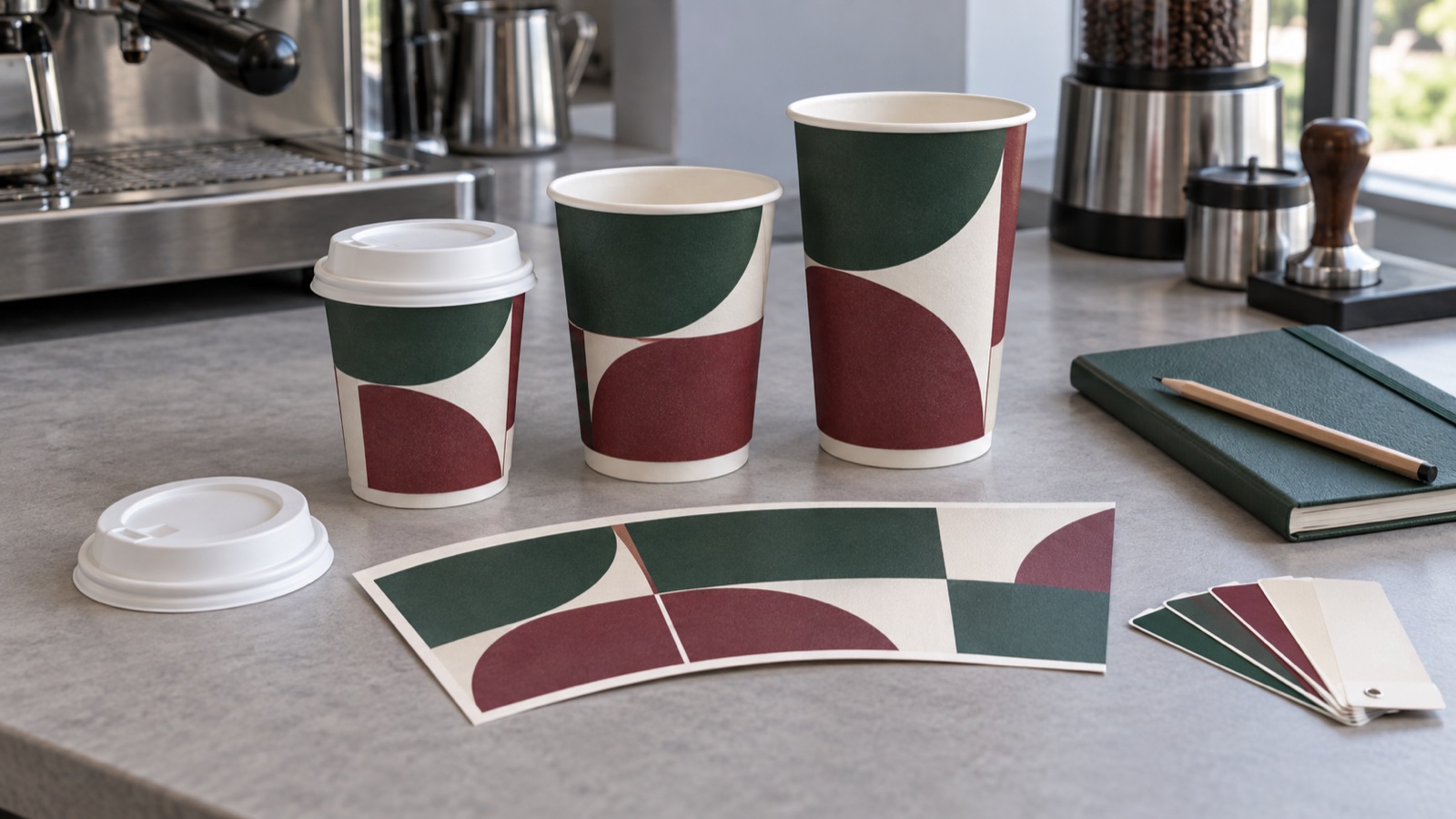
Illustration of printed paper coffee cups, sip lids, a curved artwork proof and colour swatches on a cafe counter
AI-generated procurement illustration, not a customer order, inventory photo or production dieline. Confirm the actual cup, lid, print and sample specification before ordering.

Start with the cup specification, not just the logo

“12 oz, white, with our logo” is a useful starting point, but not a complete wholesale brief. Nominal capacity alone does not establish cup dimensions or lid fit. Send the information below to compare custom printed coffee cup quotes on the same basis. Unknown details can be marked to confirm; you do not need finished artwork to start.

1. Describe how the cup will be used

State hot drinks, cold drinks, or both, the highest filling temperature, and expected holding time. Mention delivery, condensation, and whether service uses a straw or sip lid. Ask the supplier to confirm the proposed cup, coating and lid for those conditions.

2. Specify the cup structure and any sleeve

Identify single wall, double wall, or ripple wall, or ask for options. If you use a separate sleeve, include its dimensions and print requirements as an optional line item. Cups, sleeves, paper bags and printed napkins can be discussed independently; a matching set is not required.

3. Match the size to an exact lid

For each cup, provide nominal size, rim diameter, base diameter and height in millimetres, plus brim-full and intended serving capacity if known. Name your existing lid model or SKU, or request a proposed matching lid. A photo or physical reference can help when measurements are missing.

BioPak’s product FAQ, for example, lists different rim diameters and brim-full capacities within the same nominal size. These are examples from its range, not Diningprint specifications. Confirm the actual cup-and-lid combination with the supplier and a sample; diameter alone is not a fit guarantee.

4. Split quantities by size and design

List pieces for each size and each artwork, not only one combined total. State whether it is a first order or repeat requirement. Ask how the proposed production route counts minimums across sizes, designs and accessories. Do not assume they can be combined.

5. Get the quoted cup’s dieline before final artwork

Request its curved dieline with seam, rim, base, bleed and safe areas marked. Supply your logo file, colour references and design count; the printer should confirm CMYK or spot colours and the actual setup required. Outline fonts and embed images where requested.

BioPak’s paper cup artwork guide illustrates why artwork must follow a cup-specific curved template. Its tolerances and process limits are not universal: use the quoted supplier’s current specifications.

6. Put samples, documents and delivery in writing

Diningprint’s plain stock samples are free, with courier charges paid by the buyer, subject to sample availability. Custom-printed samples and setup costs are confirmed separately. A plain sample cannot verify the final print colour.

Ask the quote to identify product and lid quantities, setup and proof costs, packing, pieces per carton, carton dimensions, freight inclusions, trade term and named delivery point. Separate artwork approval, production and transport timing; give the destination and required arrival date.

Request documentation appropriate to the finished printed cup and lid, intended use and destination market. The European Commission’s food-contact overview explains the EU framework and material-specific requirements. A supplier logo or generic certificate is not proof for your exact order; confirm the applicable requirements with your compliance adviser.

Prepare your coffee cup quotation brief

Download the coffee cup RFQ checklist (.txt). Complete what you know and leave the rest as “to confirm”.

Request a coffee cup quote and paste your brief into the requirements field. For broader supplier comparisons, use the coffee shop paper supplier checklist.

Frequently asked questions

Quick answers from buyers like you

Can I reuse the dieline from my current coffee cup?

Do not assume it will fit. Ask the new supplier for the dieline of the exact quoted cup and have them confirm dimensions, seam, bleed and safe areas before you reuse artwork.

Must I choose CMYK or spot colours before requesting a quote?

No. Send your available logo file, colour references and designs. The printer should confirm the suitable print process, colour separations and setup costs for the quoted cup.

Does a plain coffee cup sample approve the final printed order?

No. A plain sample helps assess the proposed material and lid fit only if it matches the quoted specification. It cannot approve final print colour. Agree on the artwork proof and any printed sample from the planned production route separately.

Read next

Keep going on related sourcing topics.