By Sam Gao, Founder of Diningprint
Paper vs Plastic vs PLA Cups: The 2026 Foodservice Cup Comparison
The real cup decision isn't paper vs plastic — it's the lining. PE-lined is cheap but not compostable; PLA-lined is compostable but pricier; plastic is clear but scrutinized. Here's the B2B comparison, plus single-wall vs double-wall builds.
- paper cups
- plastic cups
- PLA cups
- compostable cups
- comparison
- PE lining
- single-use plastic
- café supply
- B2B
- sustainability
Quick answers from buyers like you
Are paper cups better than plastic cups?
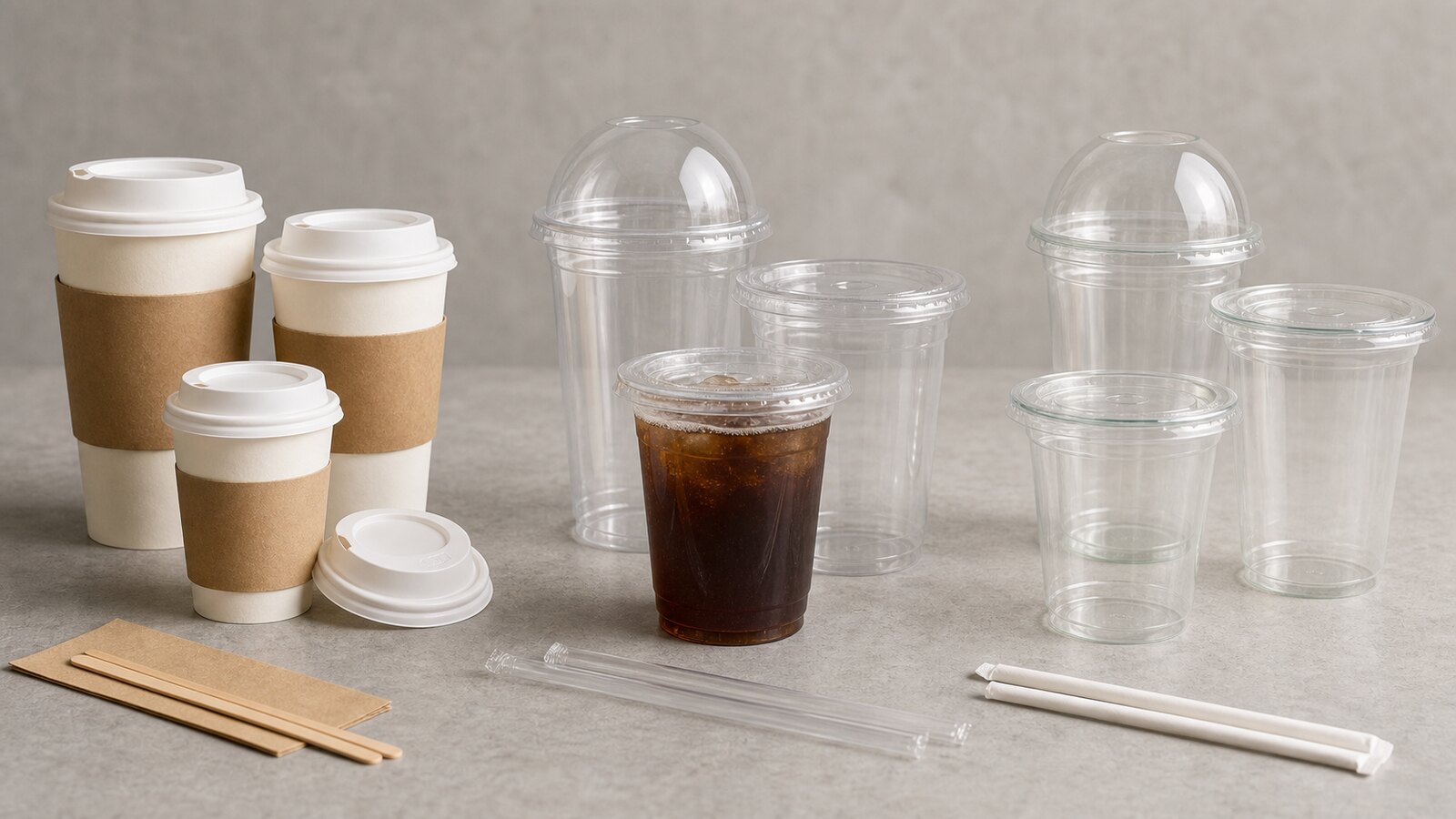
For most foodservice in 2026, yes. Paper cups are compliant with single-use-plastic scrutiny, work for both hot and cold drinks, and can be custom-printed in full color, making them a strong brand surface. Clear plastic cups still suit some cold-drink uses but carry single-use-plastic scrutiny, are hard to brand, and offer no sustainability story. The catch with paper cups is the lining — PE vs PLA — which determines whether the cup is actually recyclable or compostable.
What's the difference between PE-lined and PLA-lined paper cups?
Every paper cup has a thin waterproof lining inside, and that lining decides its eco profile. PE (polyethylene) is a cheap plastic film — reliable for hot and cold, but it makes the cup hard to recycle and not home-compostable. PLA (polylactic acid) is a plant-based bioplastic film — it lets the whole cup be certified industrially compostable (EN 13432 / BPI), at a higher cost. A standard 'paper cup' is PE-lined and is not compostable; a compostable cup must be PLA-lined.
Are paper cups recyclable or compostable?
It depends entirely on the lining. Standard PE-lined paper cups are difficult to recycle (most recyclers can't separate the plastic film) and are not compostable. PLA-lined paper cups are industrially compostable under EN 13432 / ASTM D6400 / BPI — but only in an industrial composting facility, not home compost or landfill. If a buyer needs a genuinely compostable cup, they must specify PLA lining and a compostability certificate, not just 'paper.'
What's the difference between single-wall and double-wall paper cups?
It's the build, separate from the lining. Single-wall cups are one paper layer — cheapest, but they need a separate sleeve for hot drinks so customers don't burn their hands. Double-wall cups have two bonded layers with an air gap that insulates, so no sleeve is needed and the cup reads premium — the default for specialty coffee. Ripple/corrugated-wall cups add an embossed outer layer for extra grip and a textured look. Choose the build for the drink experience and the lining for the eco/cost profile.
Which cup is best for hot coffee?
A double-wall paper cup is the standard for hot coffee — the air gap insulates so customers don't need a separate sleeve, and it feels premium. A single-wall cup also works for hot drinks but should be paired with a printed sleeve. For lining, PE handles heat fine and is cheapest; PLA-lined works for hot coffee too but can warp under very hot liquid held for a long time. Plastic cups are not suitable for hot drinks.
Are plastic cups banned?
Plastic cups face growing single-use-plastic scrutiny rather than blanket bans in most markets — some jurisdictions restrict specific single-use plastic foodware, and pressure is rising. Even where they remain legal, many operators are switching to printed paper cold cups or recycled-content (rPET) cups for compliance headroom and a better sustainability story. If you sell into tightening markets, a paper cold cup is the safer forward choice.
Can paper cups be custom printed with my brand?
Yes — paper cups are one of the best branded surfaces in foodservice. Full-color custom printing wraps the cup in your colors, logo, and artwork, and every customer holds it for the length of a drink and often photographs it. Both PE-lined and PLA-lined paper cups print in full color; clear plastic cups are much harder to brand beyond a printed band. Match the cup print to your sleeves, straws, and napkins for a unified branded drink kit.
Do you supply custom-printed paper cups wholesale?
Yes. We make custom-printed single-wall, double-wall, and cold-drink paper cups with matching lids, factory-direct, in PE-lined (cost) or PLA-lined (compostable) versions, full-color in your brand design. They're part of a complete branded drink-and-takeout kit with straws, stirrers, napkins, and packaging. Tell us your drink type, volume, and whether you need a compostable certificate, and we'll spec the build and lining and send a sample.
Keep going on related sourcing topics.
Custom Printed Coffee Cups: What to Send for a Wholesale Quote
A logo and an ounce size are only the starting point. Use this six-part brief to compare printed coffee cup quotes and avoid missing lid, artwork or delivery details.
Read article
Paper vs Plastic vs PLA Straws: The 2026 Comparison for Foodservice Buyers
Plastic straws are banned. PLA only composts industrially. Paper is compliant, cheap, and brandable — and the sogginess complaint is a ply-spec problem, not a material one. The B2B comparison of straw materials, with sizing by drink type.
Read article
Wooden vs Plastic vs PLA Cutlery: The 2026 Disposable Cutlery Comparison
Plastic is being banned. PLA only composts industrially. Wood and bamboo are compliant everywhere and biodegrade without an asterisk. Here's the head-to-head on disposable cutlery materials — and which one B2B buyers should choose in 2026.
Read article
Custom Wooden Coffee Stirrers — Bulk B2B Buyer's Guide (2026)
Bamboo or birchwood, 11–19 cm, hot-stamp foil or printed wrapper. The 2026 B2B guide to custom wooden coffee stirrers — formats, MOQ tiers, plastic-ban compliance, and the 3 specs that stop your sticks from warping.
Read article
FSC vs FDA vs BSCI vs BRC: The Certification Stack Every B2B Tableware Buyer Should Demand
FSC covers the paper, not the ink. FDA covers the product, not the factory. BSCI covers the workers, not the food safety. Here's what each certification on disposable tableware actually proves — and the stack you should demand by market.
Read article
Custom branded coffee shop packaging and cutlery, factory direct.
Plan printed cups, optional cup sleeves, napkins and takeaway bags around your drink and food service. Request each item independently or coordinate a matching set. Confirm specifications, quantities and artwork for each product before production.
See guide
Branded takeout packaging for ghost kitchens.
Custom-printed disposable tableware for ghost kitchens, virtual brands, and delivery-first restaurant groups — branded chopstick sleeves, wooden cutlery kits, and printed paper napkins. Production starts at 20,000 kits for eligible branded configurations, with per-kit pricing on request. The packaging that arrives at the customer's door is your only brand surface — we make it count.
See guide
Biodegradable cutlery kits and custom tableware for event catering.
Custom wooden cutlery kits, branded chopsticks, and printed napkins for event catering, weddings, festivals, stadium foodservice, and corporate dinners. A 3-piece wooden kit (fork + spoon + knife + napkin in a custom sleeve) starts at a 20,000-kit production MOQ and is priced on request. Lead time is 25-30 days plus freight.
See guide