By Sam Gao, Founder of Diningprint
Paper vs Plastic vs PLA Straws: The 2026 Comparison for Foodservice Buyers
Plastic straws are banned. PLA only composts industrially. Paper is compliant, cheap, and brandable — and the sogginess complaint is a ply-spec problem, not a material one. The B2B comparison of straw materials, with sizing by drink type.
- paper straws
- plastic straws
- PLA straws
- comparison
- single-use plastic ban
- bubble tea
- compostable
- sustainability
- B2B
- café supply
Quick answers from buyers like you
Are paper straws better than plastic straws?
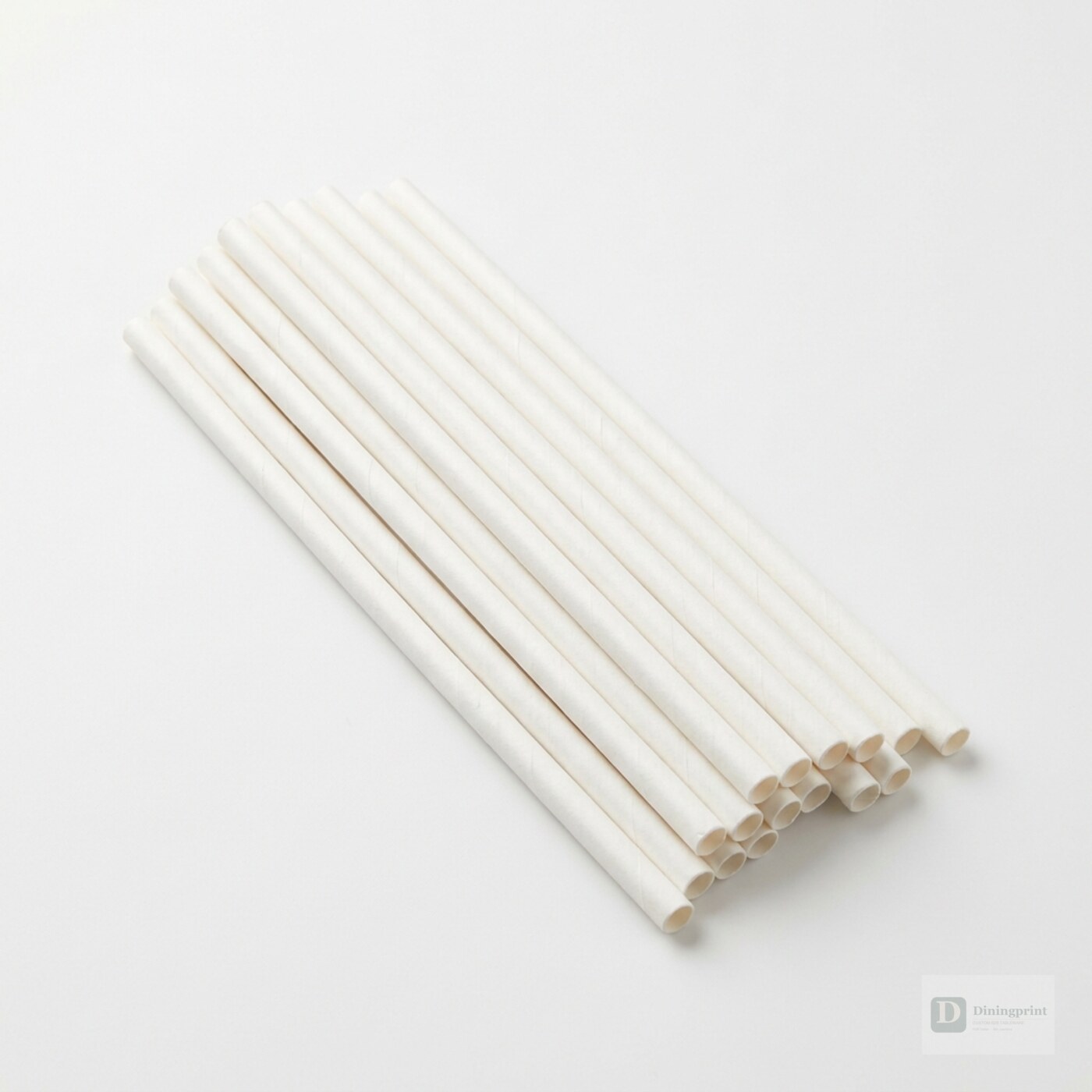
For foodservice in 2026, yes for most buyers. Paper straws are compliant with single-use-plastic straw bans (EU, UK, many US states and Australian jurisdictions), recyclable or compostable, the cheapest compliant option, and the easiest to custom-print in your brand colors. Plastic straws are banned in those markets, so they require re-sourcing as bans spread. The main complaint about paper — sogginess — is solved by specifying a 4–6 ply wall rather than a thin 2-ply straw.
Why do paper straws get soggy, and how do I prevent it?
Sogginess is a wall-thickness problem, not a fundamental flaw of paper. A cheap 2-ply straw collapses in a long iced drink; a properly specified 4–6 ply straw lasts through the drink. When ordering, lock the ply count (3–6 depending on drink length), the diameter (6 mm standard, up to 10–12 mm for bubble tea), and a food-grade seam adhesive. Get the ply right and the sogginess objection disappears.
Are PLA straws compostable at home?
No. PLA (a corn-starch bioplastic) straws are certified compostable only in industrial composting facilities under EN 13432 / ASTM D6400 / BPI. They do not break down in a home compost bin or in landfill, and they can't go in standard plastic recycling. They also warp in hot drinks. In markets without widespread industrial composting, PLA often behaves like conventional plastic at end-of-life. Paper straws have a simpler, more universally compliant end-of-life story.
What size straw do I need for bubble tea / boba?
Bubble tea needs an extra-wide bore so the tapioca pearls pass through — typically 10–12 mm diameter, versus the 6 mm standard for water and soft drinks. Because boba drinks are consumed slowly, also spec a high ply count (around 6 ply) so the straw lasts. A pointed-tip version is common for piercing sealed cup films. Paper boba straws are widely available; PLA is an option where maximum durability and industrial composting are both priorities.
Are plastic straws banned?
In many markets, yes. Single-use plastic straws are explicitly banned in foodservice across the EU (Single-Use Plastics Directive, 2021), the UK (2020), and a growing list of US states and Australian jurisdictions. They were the first item targeted by single-use-plastic legislation. If you operate in or sell into any of those markets, plastic straws are prohibited, which is why the category shifted to paper and PLA.
Can paper straws be custom printed with my logo?
Yes — and they're one of the best straw materials for branding. Full-color custom printing can wrap the entire straw in your brand colors, stripes, pattern, or logo, making it a visible brand surface in every drink. Cafés and bubble-tea brands use printed paper straws as part of a branded drink kit. Plastic and PLA straws are much harder to print directly and are usually branded only via an individual paper wrapper.
What's the difference between paper straws and PLA straws?
Paper straws are made from food-grade paper — compliant everywhere, recyclable or compostable (home and industrial), cheap, and easy to print full-color. PLA straws are a corn-starch bioplastic that looks and feels like plastic, lasts longer in liquid, but composts only industrially and warps in hot drinks. Paper suits nearly all foodservice; PLA suits buyers who specifically want a clear, plastic-like straw and have industrial composting infrastructure.
Do you supply paper straws wholesale with custom printing?
Yes. We make FSC paper straws factory-direct in 6–12 mm diameters and 3–6 ply, full-color custom-printed in your brand design, compliant with single-use-plastic straw bans worldwide. They're part of a full branded drink-and-takeout kit alongside cups, lids, napkins, and stirrers. Request a sample with your drink type and we'll recommend the right ply and diameter before you commit to volume.
Keep going on related sourcing topics.
Wooden vs Plastic vs PLA Cutlery: The 2026 Disposable Cutlery Comparison
Plastic is being banned. PLA only composts industrially. Wood and bamboo are compliant everywhere and biodegrade without an asterisk. Here's the head-to-head on disposable cutlery materials — and which one B2B buyers should choose in 2026.
Read article
Custom Wooden Coffee Stirrers — Bulk B2B Buyer's Guide (2026)
Bamboo or birchwood, 11–19 cm, hot-stamp foil or printed wrapper. The 2026 B2B guide to custom wooden coffee stirrers — formats, MOQ tiers, plastic-ban compliance, and the 3 specs that stop your sticks from warping.
Read article
FSC vs FDA vs BSCI vs BRC: The Certification Stack Every B2B Tableware Buyer Should Demand
FSC covers the paper, not the ink. FDA covers the product, not the factory. BSCI covers the workers, not the food safety. Here's what each certification on disposable tableware actually proves — and the stack you should demand by market.
Read article
Custom Printed Napkin Bands for Restaurants — B2B Buyer's Guide (2026)
Format, paper grade, print method, MOQ tier, adhesive food-safety — plus the FSC ink-certification gap most factories don't disclose. The 2026 B2B buyer's guide to custom printed napkin bands and belly bands.
Read article
Custom branded coffee shop packaging and cutlery, factory direct.
Plan printed cups, optional cup sleeves, napkins and takeaway bags around your drink and food service. Request each item independently or coordinate a matching set. Confirm specifications, quantities and artwork for each product before production.
See guide
Branded takeout packaging for ghost kitchens.
Custom-printed disposable tableware for ghost kitchens, virtual brands, and delivery-first restaurant groups — branded chopstick sleeves, wooden cutlery kits, and printed paper napkins. Production starts at 20,000 kits for eligible branded configurations, with per-kit pricing on request. The packaging that arrives at the customer's door is your only brand surface — we make it count.
See guide
Biodegradable cutlery kits and custom tableware for event catering.
Custom wooden cutlery kits, branded chopsticks, and printed napkins for event catering, weddings, festivals, stadium foodservice, and corporate dinners. A 3-piece wooden kit (fork + spoon + knife + napkin in a custom sleeve) starts at a 20,000-kit production MOQ and is priced on request. Lead time is 25-30 days plus freight.
See guide