By Sam Gao, Founder of Diningprint
OEM vs Private Label vs White Label: How to Buy Custom Disposable Tableware (2026)
White label puts your name on a stock product. Private label puts your branding on it. OEM builds the product to your spec. Most buyers want private label and call it OEM — here's the difference, and why it changes your MOQ, tooling, and lead time.
- OEM
- private label
- white label
- custom disposable tableware
- B2B sourcing
- procurement
- custom branding
- manufacturing
Quick answers from buyers like you
What's the difference between OEM and private label for disposable tableware?
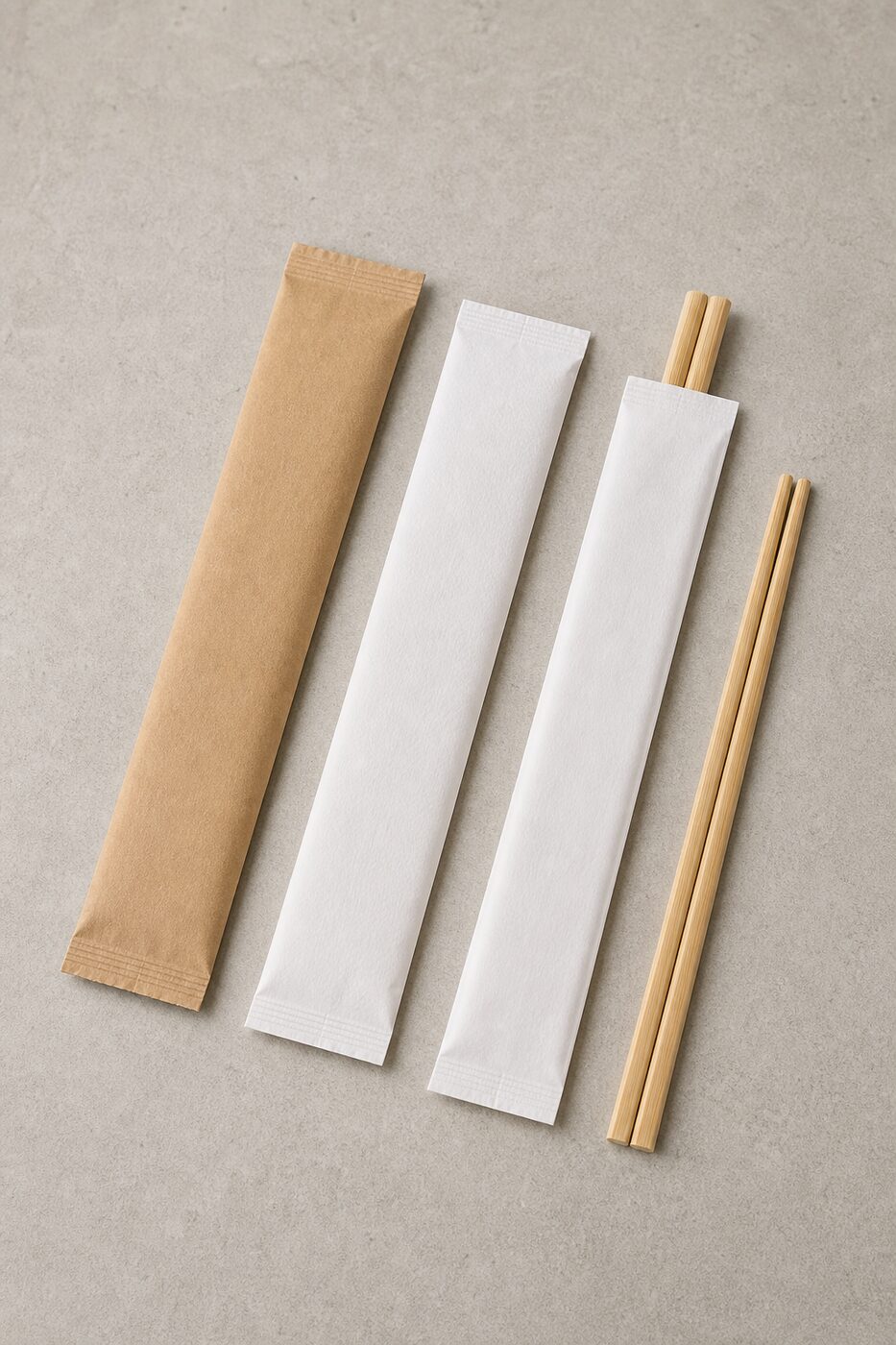
Private label means a stock product customized with your branding — your logo and artwork printed on the chopstick sleeve, cutlery wrapper, or napkin, while the underlying product is the factory's standard spec. OEM means the product itself is built to your specification — a custom length, wood species, shape, or kit construction that the factory doesn't normally stock. Private label customizes what the customer sees; OEM customizes the product. Private label has lower MOQ and no product tooling; OEM requires custom tooling and a higher minimum order.
What is white label disposable tableware?
White label is an existing stock product the factory already makes, sold under your name with minimal or no change — often a plain or generically-sleeved product you resell or distribute, sometimes with just a sticker. It's the fastest, lowest-MOQ option, but offers no brand differentiation because the same product is available to competitors. Distributors and wholesalers use white label; brands that want their name on the table use private label instead.
Which model do most restaurants and food brands use?
Private label. Most restaurants, cafés, ghost kitchens, and food brands want their logo and artwork on a proven product without paying for custom tooling or accepting OEM's higher MOQ. They start from a standard chopstick, cutlery piece, or napkin and customize the branding — the sleeve, wrapper, or hot-stamp. Many buyers call this 'OEM,' but technically it's private label until the product spec itself is customized.
Does OEM cost more than private label?
Usually, for the first order, because OEM requires custom tooling (a cutting die, mold, or custom hot-stamp die) and a higher minimum order to amortize it. Private label only needs a print plate or standard die. Over many reorders the per-unit difference narrows, but OEM's upfront tooling and higher MOQ make it more expensive to start. That's why a common path is to begin private label and move to OEM once volume justifies the bespoke product.
Do I need a high MOQ for private label chopsticks?
Not necessarily. For private label, the print method sets the minimum order, not the chopstick — digital printing accepts smaller runs with no plates, while offset and hot-stamp have higher minimums because of plate and die setup. Because the product itself is the factory's stock spec, you avoid the high MOQ that a custom OEM product would require. The certification stack and artwork workflow are the same regardless of order size.
Can one factory do white label, private label, and OEM?
Yes, if it runs its own production line rather than brokering through a trading company. A factory with in-house production can sell you a white-label stock item, print your branding for private label, or build a bespoke product for OEM — and move you from one model to the next without re-sourcing. A trader that subcontracts production has less control over custom specs, tooling, and lead time, and adds a margin layer.
How do I protect a custom product or design from being copied?
Get exclusivity in writing. For an OEM product built to your spec, or a distinctive private-label design, ask the factory in the PO or contract not to sell your spec or artwork to other buyers. Reputable factories agree to this for custom work. It's harder to enforce on generic specs, but for a genuinely bespoke mold or a unique design it's a reasonable and common term.
Should I start with private label or go straight to OEM?
Start private label unless a stock product genuinely can't meet your need. Private label lets you validate the brand and demand with proven product at lower MOQ and no tooling cost. Move to OEM once volume is proven and a bespoke product (custom length, wood, shape, or kit) would differentiate you further. Jumping to OEM first means paying for tooling and a high minimum on an unproven product.
Keep going on related sourcing topics.
How to Choose a Custom Chopstick Supplier: 2026 Restaurant Owner's Guide
MOQ, real unit costs, lead times, FSC compliance, and the 10 questions every restaurant buyer should ask a chopstick factory before signing a PO.
Read article
Custom Printed & Engraved Chopsticks for Restaurants | Bulk Factory Pricing
Choose printed sleeves or engraving for restaurant chopsticks, with real MOQ, sample proofing, bulk pricing, and a factory-direct quote path.
Read article
The 4-Layer China Supply Chain for Disposable Tableware: What Importers Don't See
Most Western buyers think they're 1-2 hops from the factory. For Northern Chinese wood and bamboo disposables, the reality is usually four. Here's how the structure inflates wholesale prices 60-80% — and three questions that detect it in 30 seconds.
Read article
FSC vs FDA vs BSCI vs BRC: The Certification Stack Every B2B Tableware Buyer Should Demand
FSC covers the paper, not the ink. FDA covers the product, not the factory. BSCI covers the workers, not the food safety. Here's what each certification on disposable tableware actually proves — and the stack you should demand by market.
Read article
Branded takeout packaging for ghost kitchens.
Custom-printed disposable tableware for ghost kitchens, virtual brands, and delivery-first restaurant groups — branded chopstick sleeves, wooden cutlery kits, and printed paper napkins. Production starts at 20,000 kits for eligible branded configurations, with per-kit pricing on request. The packaging that arrives at the customer's door is your only brand surface — we make it count.
See guide
Biodegradable cutlery kits and custom tableware for event catering.
Custom wooden cutlery kits, branded chopsticks, and printed napkins for event catering, weddings, festivals, stadium foodservice, and corporate dinners. A 3-piece wooden kit (fork + spoon + knife + napkin in a custom sleeve) starts at a 20,000-kit production MOQ and is priced on request. Lead time is 25-30 days plus freight.
See guide
Custom printed chopsticks and sushi restaurant supplies for wholesale orders.
Start with the items every sushi customer actually touches: bamboo chopsticks, printed chopstick sleeves, napkins, sauce cups, paper bags, and simple takeaway boxes or trays when needed. The tableware does not need to be complicated; the goal is a clean sushi experience with one consistent brand impression.
See guide