DPDiningprint
All articles

June 7, 2026

By Sam Gao, Founder of Diningprint

9–10 cm Wooden Cutlery: The Hot-Stamp Sweet Spot for Gelato, Boba & Small-Format F&B

Small-format F&B grew 5–7× since 2020 — gelato, boba, frozen yogurt, dessert sushi all need 9–10 cm cutlery. Here's why hot-stamp is the only viable print method at this size and what to spec in the PO.

  • wooden cutlery
  • small format
  • hot stamp
  • gelato
  • boba
  • yakiniku
  • kids menu
  • B2B
  • factory direct

TL;DR — the 9–10 cm wooden cutlery slot most buyers underestimate

  • 9–10 cm wooden spoons / sporks / spatulas are the highest-margin custom-print SKU in disposable tableware — and most factories under-stock them.
  • At this size, hot-stamp foil is the only viable print method. Offset bleeds, digital lacks burn-edge contrast on wood.
  • MOQ: 30,000–50,000 pcs depending on length and wood species.
  • Use cases driving demand: gelato cups, yogurt parfaits, boba / bubble tea, frozen yogurt, dessert sushi, kids’ meal cutlery, sampling stations.
  • Three specs to lock in your PO that most quotes leave out: hot-stamp depth, burn-edge tolerance, and wood grain orientation.

Quick answer: what counts as “9–10 cm wooden cutlery”?

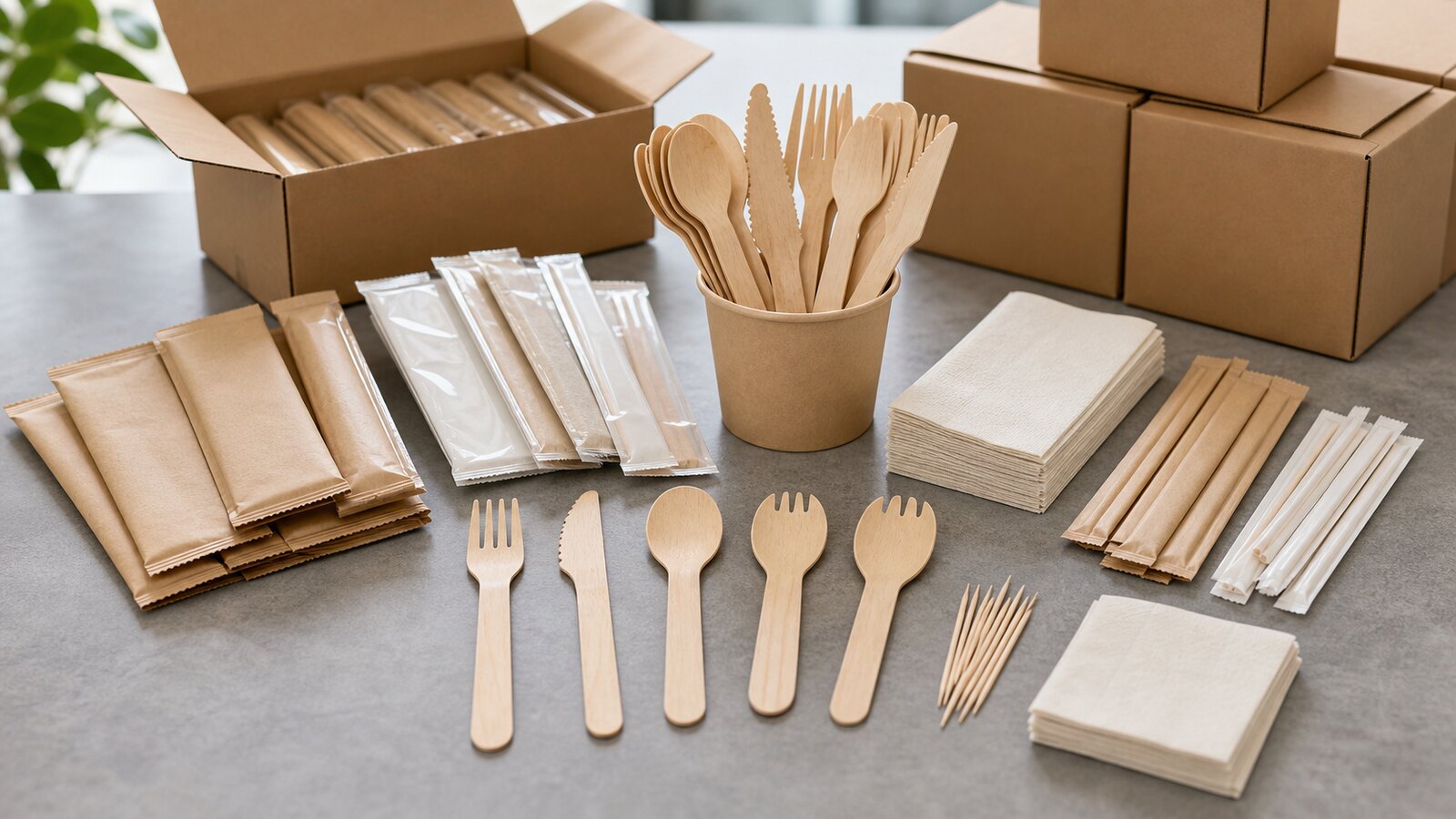
Quick answer: 9–10 cm wooden cutlery is the small-format subset of disposable wooden tableware — mini spoons, sporks, and spatulas designed for portioned desserts, cold drinks with toppings, and kids’ or sampling menus. The total length sits in a tight 9.0–10.5 cm range, which is short enough to fit gelato cups and tall boba cups but long enough for adult hands. Custom-printed branding at this size requires hot-stamp foil — offset and digital both fail at this scale because the wood grain interrupts the ink film before it can cure.


Why 9–10 cm is the most overlooked SKU in the category

The standard catalog of disposable wooden cutlery is built around the full-size adult kit: a 140 mm spoon, 160 mm fork, and 160 mm knife wrapped in a printed paper sleeve. That kit serves the meal-replacement / lunchbox / catering segment well.

The 9–10 cm format serves a completely different segment that has grown 5–7× since 2020: small-format F&B. Gelato shops scaling from 1 to 5 locations. Boba chains expanding across borders. Frozen-yogurt operators returning after the 2010s collapse. Tea labs and coffee-shop dessert programs. Yakiniku BBQ chains using portioned condiments. Hotel breakfast buffets needing a sample-sized utensil for jams and butters. Kids’ menus that need cutlery sized for smaller hands.

None of these accounts buy 14–16 cm cutlery — the format simply doesn’t fit the cup or the use case. They all need 9–10 cm. And because most large factories don’t prioritize this length, branded 9–10 cm is consistently easier to differentiate on and harder for competitors to replicate quickly.


Why hot-stamp is the only viable print method at this size

This is the technical detail that separates suppliers who know wood-printing from suppliers who don’t. At 9–10 cm length, the available print area on the handle is roughly 8–15 mm² — a postage-stamp-sized window.

Offset CMYK printing requires ink to spread evenly across a continuous paper substrate. On a wood handle that small, the natural wood grain interrupts the ink film before it cures. The result is a smudged, fuzzy logo with 5–8% color shift versus the proof.

Digital print (inkjet-style) has a similar problem — the droplet pattern doesn’t build up enough opacity on a porous wood surface at this scale. Print reads thin and washed-out, and fades visibly within 6 months of warehouse storage in humid back-of-house conditions.

Hot-stamp foil bypasses both problems. A heated brass die presses a thin metallic foil layer (gold, silver, copper, rose gold, black, white) directly into the wood surface at 130–180 °C. The foil bonds into the wood at a depth of 0.05–0.1 mm, not on top of it. The result is a crisp, sharp, durable logo with no ink to fade, smudge, or interact with the wood grain.

If a supplier quotes you “offset wooden cutlery” at 9–10 cm, they’re showing you a sample from a different size category. Our hot-stamp vs offset vs digital deep-dive covers the cost and MOQ implications across all three methods.


Size chart: 9 / 10 / 11 cm matched to use case

LengthUse caseWood preferredHot-stamp area
9.0–9.6 cmGelato / yogurt / sushi condiment / samplingAspen (finer grain)8–10 mm²
10.0–10.5 cmBoba / matcha / small-format ice cream / tea labsBirch (sturdier)12–15 mm²
11.0–11.5 cmStandard ice cream / fruit cups / dessert cafesBirch or basswood15–18 mm²

Outside this range the design considerations shift. Below 9 cm you’re into “mini” spoons for cake decoration and tasting flights — a different supply chain with much higher MOQs because the size requires custom tooling. Above 11.5 cm you’re back in standard adult cutlery territory (covered in our full wooden cutlery guide).


Wood species comparison at small size

Wood grain matters more at 9–10 cm than at 14–16 cm because the print area is so small that surface texture directly affects logo fidelity.

Aspen — the small-format winner

Aspen has the finest grain of the three common disposable cutlery woods. At 9–9.6 cm, this matters enormously: hot-stamp foil bonds cleanly with crisp edges because there’s no visible wood-fiber pattern to interrupt the metallic layer. The trade-off is lower mechanical strength — aspen spoons snap more easily when used to scrape a stiff yogurt or hard-frozen gelato. Mitigation: spec a slightly thicker handle (2.5 mm vs 2.0 mm) at MOQ.

Birch — the boba and bubble-tea workhorse

Birch is sturdier than aspen and tolerates the mechanical stress of boba pearl agitation, frozen yogurt scraping, and ice-cream digging without splintering. The grain is more visible than aspen but still acceptable for hot-stamp at 10 cm and above. Most B2B orders for 10–11 cm spoons default to birch.

Bamboo — the FSC-required default

Bamboo is the most common FSC-certified option in 2026 because of well-established chain-of-custody documentation. At 9–10 cm, bamboo’s natural striation pattern is more visible than aspen or birch — this is a visual feature for some sustainability-led brands (the “you can see the bamboo” cue), but a fidelity issue for crisp logos. Lock the bamboo grade in the PO if you choose this route; lower grades show pronounced striation that disrupts hot-stamp.

For full wood-species comparison across all cutlery sizes, see bamboo vs birchwood vs aspen.


MOQ tiers and lead time in 2026

ConfigurationMOQUnit cost (USD)Lead time
9 cm aspen, hot-stamp 1-color foil50,000 pcs$0.012 – $0.01818–25 days
10 cm birch, hot-stamp 1-color foil30,000 pcs$0.014 – $0.02020–28 days
10 cm birch + sleeve (kit)20,000 kits$0.022 – $0.03022–30 days
11 cm birch, hot-stamp 1-color foil20,000 pcs$0.013 – $0.01920–30 days
FSC bamboo, hot-stamp30,000 pcs$0.018 – $0.02622–30 days
Hot-stamp die cost (one-time)$80 – $250 per design3–5 days

Common foil colors at no premium: gold, silver, copper, black, white. Pantone-spec colors add ~15%. Multi-color foils require a separate die per color, which doubles the setup cost. For most brands, a single bold foil color reads sharper than two-color combinations at this scale.

Sea freight adds 18–35 days to US / EU / AU ports. Air freight adds 3–7 days at roughly 3× sea cost — worth it for the first 5,000 pcs of a launch order if your storefront date is fixed.


The three specs nobody puts in standard quotes

Most supplier quotes list length, wood species, foil color, MOQ, and lead time. The three specs below are typically absent from quotes and matter enough to write into the PO contract section.

1. Hot-stamp depth (0.05–0.1 mm into the wood)

Stamp depth determines durability. Below 0.05 mm and the foil sits on the surface, fading within 6 months of humid back-of-house storage. Above 0.1 mm and the deep impression risks cracking the wood, especially at the thinner handle edge. The 0.05–0.1 mm window is the sweet spot. Spec it in the PO.

2. Burn-edge tolerance (± 0.3 mm)

The crisp edge between foiled and bare wood defines whether the logo looks premium or smudged. Anything looser than ± 0.3 mm shows as a fuzzy boundary at this scale — visible to the customer holding the spoon. Mid-tier factories quote ± 0.5–0.7 mm by default; the difference is sample-prep care, not a more expensive die.

3. Wood grain orientation (long-grain, lengthwise)

At 9–10 cm, cross-grain orientation makes the handle prone to splitting along the foil line during print pressure. Long-grain (the wood grain runs parallel to the handle length) eliminates this. Most premium factories ship long-grain by default; lower-tier factories cut whatever’s most efficient from the blank board. Specify it.


Sample policy: three ways to test before committing

  1. Free blank sample. 30–50 plain (unprinted) cutlery in your target length and wood species, shipped at our cost in 3–5 days. For evaluating wood grain, handle weight, and mouth-feel.
  2. $49 printed sample kit. Ships in 5–10 days with hot-stamped samples in 3 foil colors plus a Pantone reference. Sample cost credited toward production order. Order the printed kit.
  3. 1,000–5,000-pc paid trial. Lower-MOQ hot-stamp run for single-location pilot. $50–$120 per 1,000 pcs depending on length and wood species.

Where to next

If you already know the spec you want, request a quote with your target length, wood species, foil color, and quantity, and we’ll come back with a full breakdown and the $49 sample kit shipped.

If you’re still figuring out the broader kit (adding a sleeve, picking the wood species, comparing print methods), the full wooden cutlery factory-direct guide covers adult-sized 14–16 cm format, and custom printed chopstick sleeves covers the paper-side branding when you bundle cutlery with chopsticks.

For the print-method decision tree across all formats, hot-stamp vs offset vs digital is the deeper read.

About Diningprint

Diningprint is a B2B custom-printed disposable-tableware factory shipping to restaurants, cafés, food brands, hotels, and event caterers in 60+ countries. We run our own production line — wood preparation, hot stamping, sleeve printing, and kit packing in the same Dalian facility — which lets us quote factory-direct prices, control FSC chain-of-custody batch-to-batch, and produce small-format 9–10 cm cutlery at MOQs that don’t require committing to 100k+ pcs up front. See the catalogue, preview your logo at the customizer, or order the printed sample kit.

Industry context in this post draws on Diningprint’s direct production experience plus an anonymized 20-year veteran Northern China factory director’s account. Prices and MOQs are typical 2026 ranges; final quotes vary with artwork complexity, FSC status, wood species, and freight market conditions.

Frequently asked questions

Quick answers from buyers like you

What is the MOQ for custom hot-stamped 9–10 cm wooden cutlery?

MOQ depends on length and wood species. 9 cm aspen starts at 50,000 pieces (finest-grain wood, slightly tighter tolerance needed). 10 cm birch starts at 30,000 pieces. 11 cm birch starts at 20,000 pieces. Add ~$80–$250 one-time hot-stamp die cost per design. Below these MOQs, expect a 1,000–5,000-piece paid trial at $50–$120 per 1,000 pieces for single-location pilots.

Why can't you use offset or digital printing on 9–10 cm wooden cutlery?

The print area on a 9–10 cm wooden handle is only 8–15 mm² — postage-stamp sized. Offset ink doesn't cure evenly on a porous wood surface at this scale (5–8% color shift, fuzzy edges). Digital print lacks opacity buildup and fades within 6 months of warehouse storage. Hot-stamp foil bonds into the wood at 0.05–0.1 mm depth and stays crisp for years.

What's the difference between aspen, birch, and bamboo at 9–10 cm length?

Aspen has the finest grain, making it the small-format winner for crisp hot-stamp at 9–9.6 cm; trade-off is lower mechanical strength (spoons can snap on hard-frozen gelato unless handle thickness is increased to 2.5 mm). Birch is sturdier — best for 10–11 cm boba and ice-cream spoons where the cutlery scrapes thick contents. FSC bamboo has visible striation that disrupts crisp logos but is required for most EU/AU sustainability claims.

What wood is best for small wooden ice cream spoons?

Birch is the standard for 10–11 cm ice cream spoons — sturdy enough to dig into hard-frozen ice cream without splintering. Birch's visible grain is acceptable at this size and works well with hot-stamp foil. For premium gelato cafés serving softer gelato, aspen at 9–9.6 cm offers cleaner hot-stamp results but needs a slightly thicker 2.5 mm handle to avoid snapping.

Can 9–10 cm wooden cutlery be FSC certified?

Yes. FSC-certified bamboo is the most common option at this size, with established chain-of-custody documentation. FSC-certified birch is also available, with a 10–15% premium over uncertified material. FSC-certified aspen is harder to source on short lead time but available with notice. EU and Australian retail-facing brands increasingly require FSC; US and most Asian markets accept uncertified.

How much does a 9–10 cm hot-stamped wooden spoon cost?

Factory-direct unit cost in 2026 ranges $0.012–$0.026 per piece, depending on length, wood species, and FSC status. 9 cm aspen hot-stamp runs $0.012–$0.018. 10 cm birch hot-stamp runs $0.014–$0.020. FSC bamboo hot-stamp runs $0.018–$0.026. Add a one-time $80–$250 hot-stamp die cost per design (amortized over the production run).

What hot-stamp foil colors are available for wooden cutlery?

Gold, silver, copper, rose gold, black, and white are standard with no premium. Pantone-spec colors add ~15% to unit cost. Holographic and pearlescent foils are available but typically restricted to 50,000+ piece runs. One foil color per die — multi-color designs require a separate die per color, which doubles setup cost and is rarely worth it at this scale where simplicity reads sharper.

How long does production take for a 30,000-piece custom 10 cm wooden spoon order?

Production timeline is 20–28 days after artwork approval and PO confirmation. The hot-stamp die itself takes 3–5 days to manufacture. Then wood prep, hot-stamp pressing, QC, and packing run 18–25 days. Sea freight adds 18–35 days to US/EU/AU ports; air freight 3–7 days at roughly 3× sea cost. Plan for a 50–65 day total timeline for the first order.

Why does my hot-stamped logo on the wooden spoon look fuzzy at the edges?

Two most common causes: (1) burn-edge tolerance is looser than ±0.3 mm — at 9–10 cm scale, anything looser shows as visible smudge. Spec the tolerance in the PO contract section, not just the artwork file. (2) Wood grain orientation is cross-grain instead of long-grain — at this size, cross-grain wood fibers interrupt the foil edge and create the fuzzy look. Both are sample-prep issues, not more expensive die costs.

Read next

Keep going on related sourcing topics.

Guide

Disposable Wooden Cutlery, Factory-Direct: Bulk Wholesale, Biodegradable Sets, and Custom Printing for Restaurants & Caterers

Bulk birchwood forks, FSC bamboo sets, custom-printed sleeves, hot-stamped handles — here's how wooden cutlery actually gets made at the factory, with 2026 unit costs and MOQs.

Read article

Guide

Hot Stamp vs Offset vs Digital: Custom Chopstick Printing Methods Compared

Hot stamp for premium foil logos. Offset for high-volume full-color sleeves. Digital for small runs and variable artwork. Here's the cost, MOQ, and decision framework for each.

Read article

Guide

Custom Printed Chopstick Sleeves — Complete B2B Buyer's Guide (2026)

Paper grade, print method, MOQ tier, ink food-safety — and the FSC gap nobody talks about. The complete 2026 buyer's guide to custom printed chopstick sleeves, with real factory specs and PO clauses.

Read article

Guide

Bamboo vs Birchwood vs Aspen: Which Chopstick Wood Is Right for Your Restaurant?

Bamboo is best for 80% of restaurants. Birchwood is the sushi-grade premium choice. Aspen is the budget option that fades fast. Here's exactly how each wood performs on strength, print, cost, and sustainability.

Read article

For your industry

Custom packaging for coffee shops & cafés.

Custom-printed coffee stirrers, branded paper napkins, and takeaway cup sleeves for coffee shops and cafés — birchwood stirrers $0.003–$0.006 per piece, MOQ 50,000; printed napkins from $0.008 per piece, MOQ 20,000. FSC-certified, hot-stamp or offset CMYK print, ships to 60+ countries.

See guide

For your industry

Custom chopsticks & disposable tableware for event catering.

Custom wooden cutlery kits, branded chopsticks, and printed napkins for event catering, weddings, festivals, and corporate dinners. 3-piece wooden kit (fork + spoon + knife + napkin in custom sleeve) at $0.030–$0.045 per kit, MOQ 5,000 (digital) or 20,000 (offset). Laser-engraved chopsticks with couple's names available from 5,000 pairs. Lead time 25–30 days plus freight.

See guide

For your industry

Branded takeout packaging for ghost kitchens.

Custom-printed disposable tableware for ghost kitchens, virtual brands, and delivery-first restaurant groups — branded chopstick sleeves, wooden cutlery kits, and printed paper napkins. MOQ from 5,000 kits (digital) or 20,000 kits (offset), unit cost $0.025–$0.045 per kit. The packaging that arrives at the customer's door is your only brand surface — we make it count.

See guide