Inside a Custom Chopstick Factory: A 5-Station Video Tour of How Disposable Tableware Is Actually Made
Most coverage of disposable tableware is written from the restaurant's perspective. This is the factory side — what happens in the 30 days between your artwork approval and a sealed export carton, walked through in five short videos.
- factory tour
- production process
- custom chopsticks
- manufacturing
- QC
- B2B
- behind the scenes
TL;DR (the short version)
- This is a video tour of a Northern China disposable tableware factory — five stations, recorded in May 2026, with the customer logos and worker faces blurred for confidentiality.
- Custom-printed wooden chopsticks and cutlery go through raw stock → cutting → shaping → sanding → printing → individual wrap → carton pack → container load. The whole sequence runs in 18–25 days for a typical 50,000-unit production order.
- The two stations restaurant buyers most often overlook are quality control on individual wrapping and carton orientation in container loading. Both are visible on tape; both quietly determine whether your product arrives presentable.
- You won't see worker faces or customer brand names below — those are blurred per our supplier-confidentiality policy. The production process is fully transparent; the people and the IP are not.
Why we filmed this
Most coverage of disposable tableware is written from the restaurant's point of view: which material, what cost, how to brief a supplier. That view stops at the moment you sign the PO. Everything between artwork approval and a sealed carton landing in your loading bay is invisible to most buyers — yet it's where the actual decisions about your product's quality get made.
Diningprint works directly with partner factories in Liaoning, China — a region that has been the wood disposable tableware hub of the country since the 1990s, thanks to its access to managed birch and bamboo forests and proximity to Dalian's port. We recorded these clips on a typical production day in May 2026.
A 20-year veteran factory director (anonymized at his request, having spent his career managing similar Northern China lines) walked us through what each station actually does and where small details quietly change the final product's quality. His notes are folded into the explanations below.
Station 1 — Raw material and feeder line
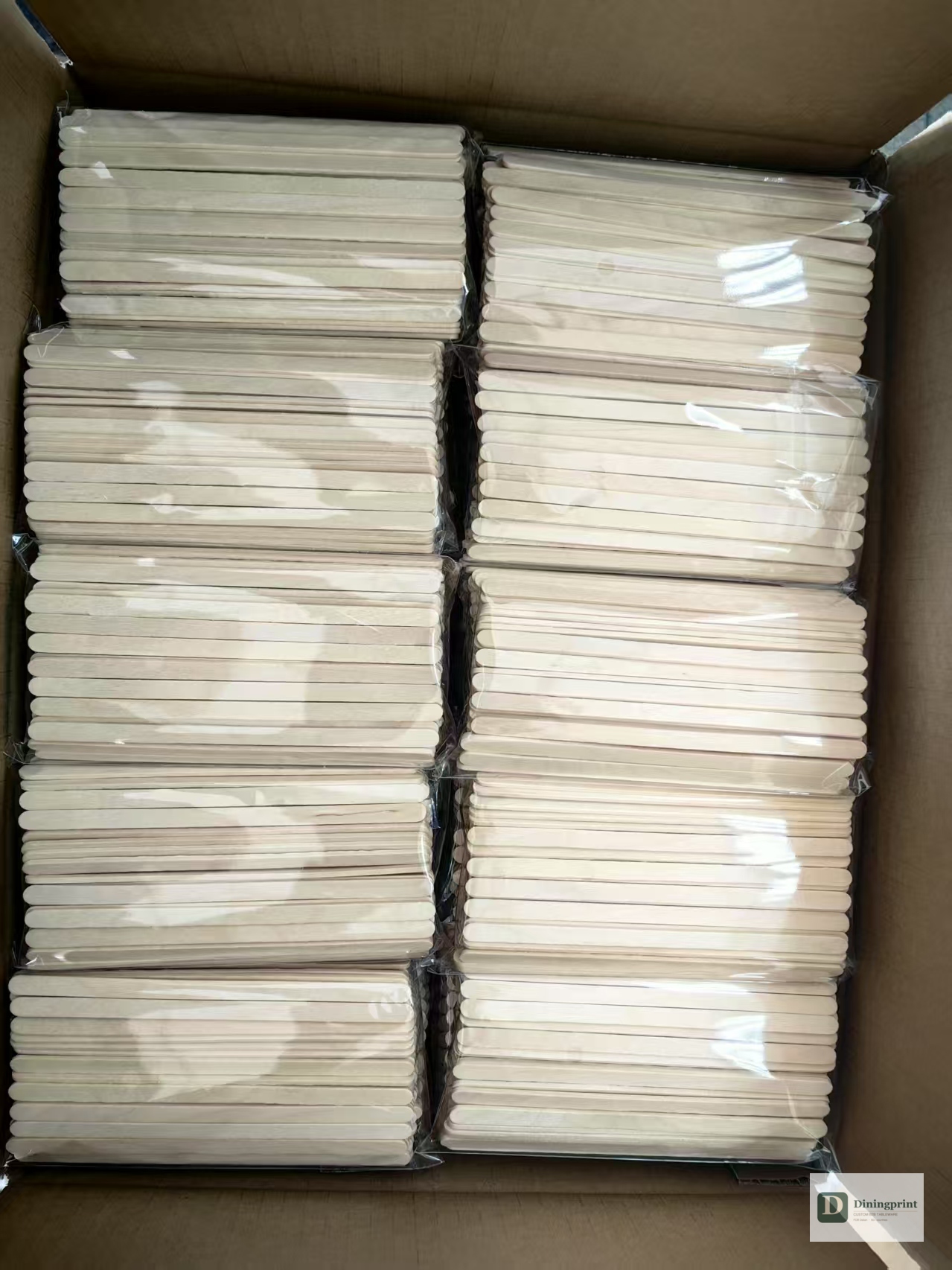
Custom chopstick and wooden-cutlery production starts with planks of kiln-dried wood — typically birchwood (Betula platyphylla) or aspen for cutlery, and either bamboo or birchwood for chopsticks. The wood is steamed for 10+ hours before any cutting, which is the step that controls bacterial load and what gives FDA / LFGB food-contact compliance later.
According to the factory director: "Wood is actually safer than bamboo for food contact, because the long steam cycle is mandatory on wood and optional on bamboo. Buyers usually don't know this — they assume bamboo is the more 'natural' choice and pay a premium for it. Both are fine if the steaming was done properly, but you should always ask which step the factory uses and how long it ran."
That's the first question worth asking any supplier — not "do you have FSC certification" (most do), but "how long do you steam the raw stock before cutting?"
Station 2 — Cutting, shaping, and tip-rounding
The cutting line is the loudest station on the floor. A continuous strip of wood travels through a sequence of rollers and circular blades that split the plank into individual chopstick or cutlery blanks. Each blank is shaped against a profile cam, then tip-rounded — a separate sub-station that exists specifically because customers occasionally complain about splinters from sharp tips.
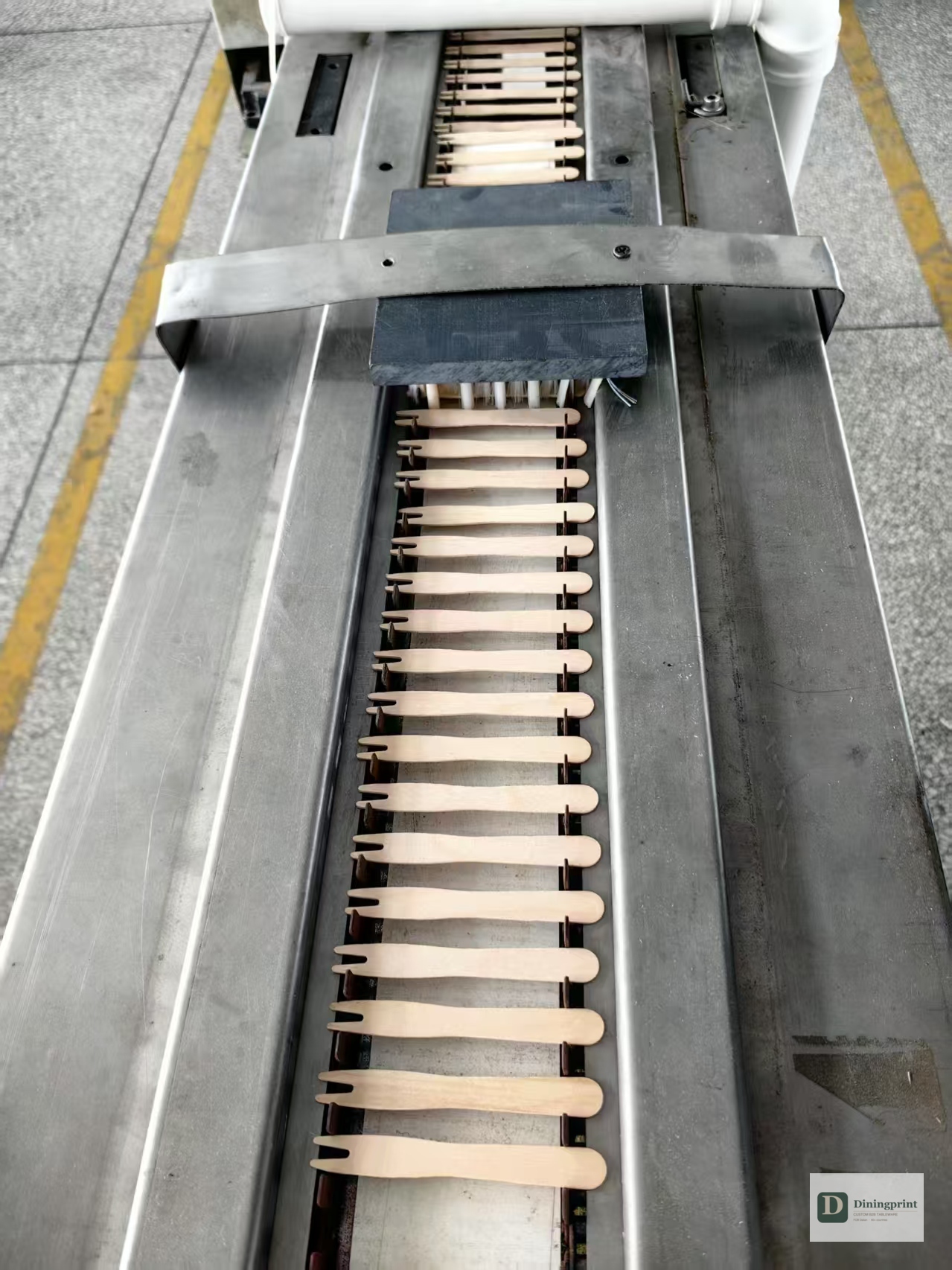
This stage runs at roughly 100,000 pieces per shift per line, but only about 92–95% of output passes inline QC. Defective pieces are pulled at the next station for grinding into wood chips, which the factory sells to a paper pulp buyer downstream. Nothing is wasted; not for environmental reasons specifically, but because waste at this scale becomes a real revenue line.
Station 3 — Custom printing (hot stamp, offset, digital)
This is where the blank product becomes your product. Three print methods coexist on most factory floors and each has its own line:
- Hot stamp foil on the chopstick or cutlery body (typical for premium, single-color metallic designs)
- Offset on the paper sleeve or napkin (typical for full-color and high-volume runs)
- Digital direct-print for short runs, variable artwork, or sub-MOQ trial orders
We've covered the cost-and-MOQ trade-offs between these in detail in our printing methods comparison — the video above shows hot stamp running. Notice the die comes down at a precise temperature and dwell time; both are calibrated per artwork (deeper foils need higher temperature). Setting a new die costs about $80–$150 in plate fabrication, which is the line item that determines whether sub-1,000-piece custom runs are viable.
Station 4 — Individual wrap and bundling
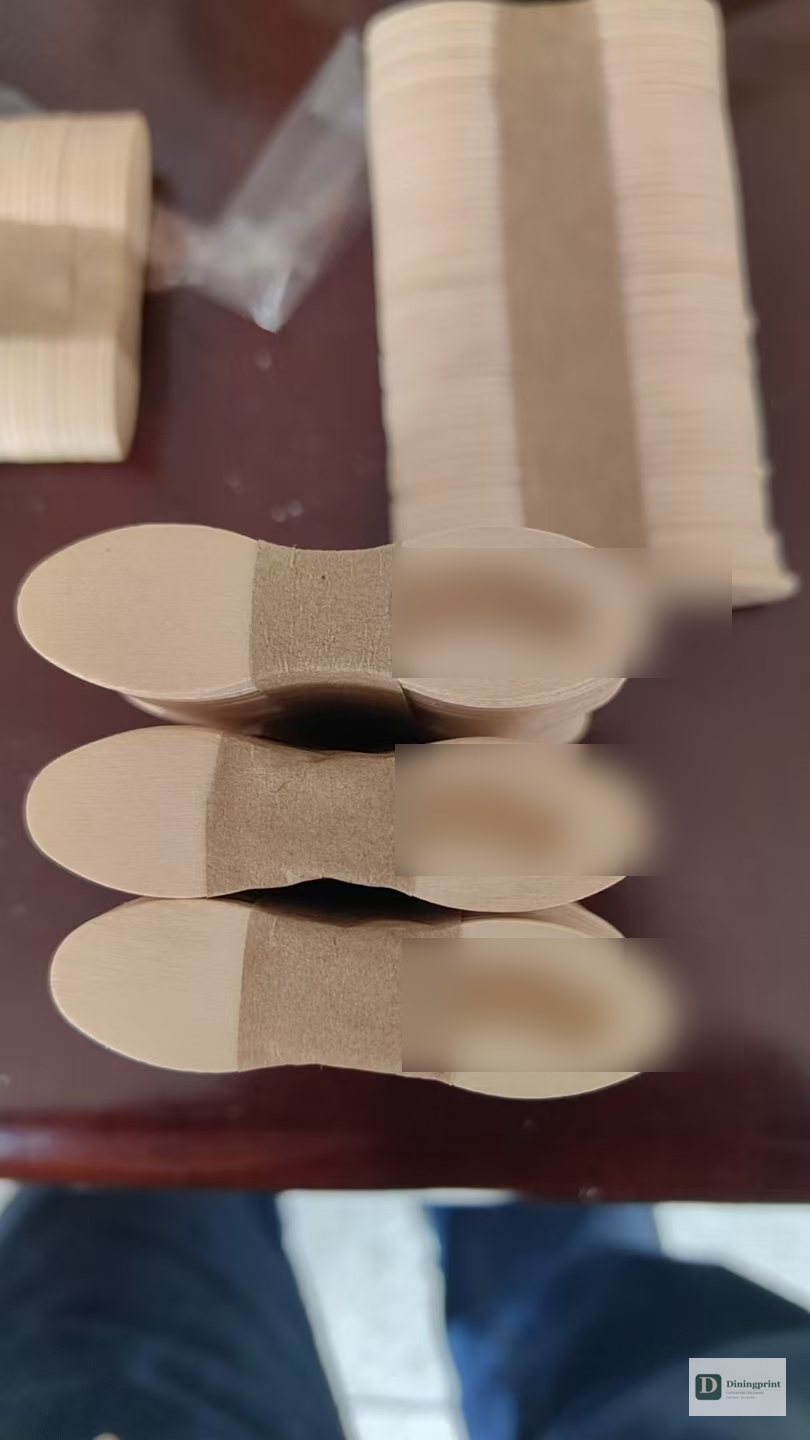
For paper-wrapped (Japanese-style waribashi) and plastic-wrapped chopsticks, the wrapping machine pulls a continuous paper or film strip across the chopstick body, folds it, and seals it with either heat or glue. This is the most quality-sensitive station on the floor — wrap alignment, seam straightness, and seal integrity all show up immediately to your end customer.
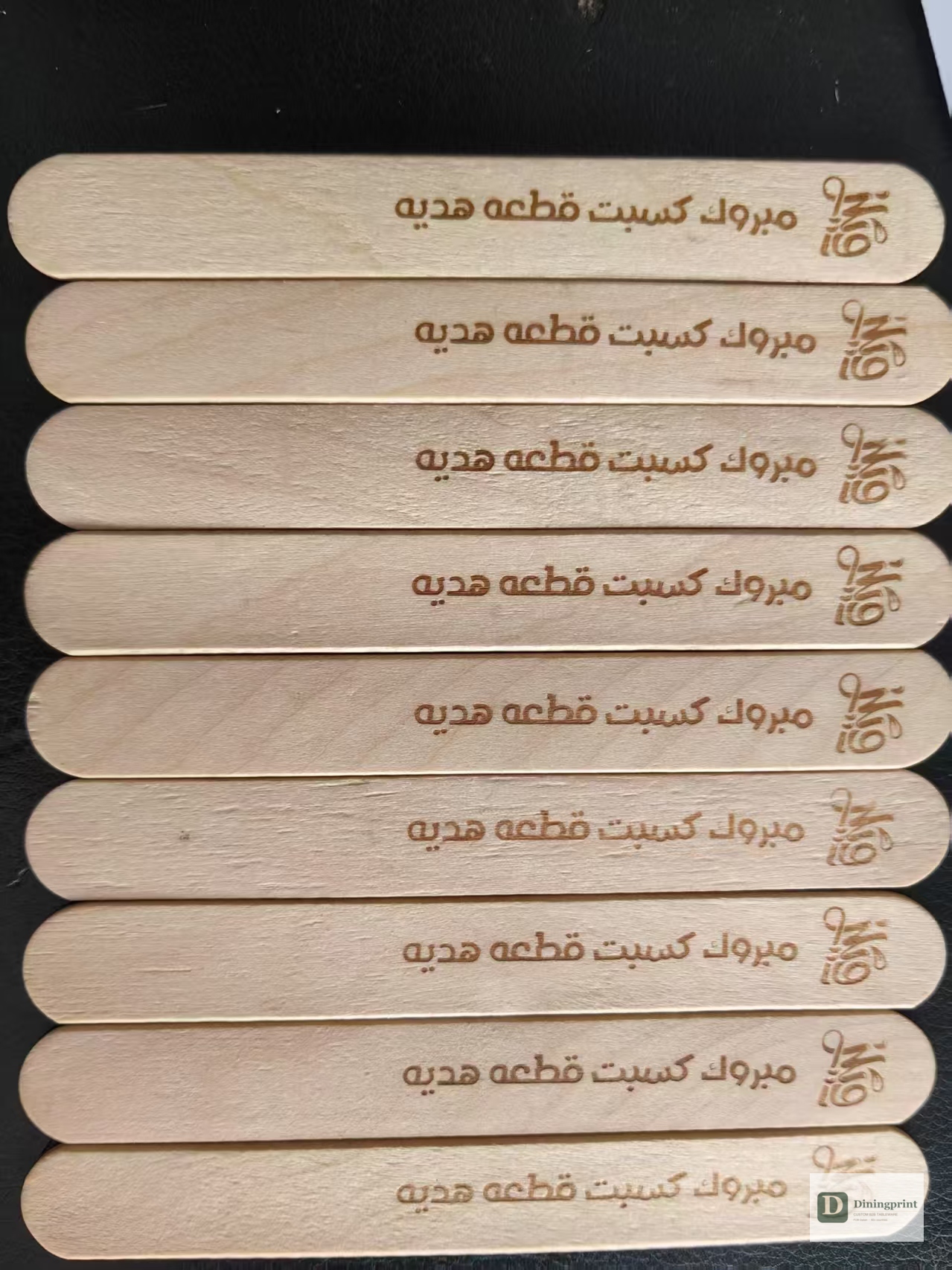
Bundled (non-individually-wrapped) chopsticks skip this station and go straight to the packing line. About 60% of our customer orders are individually wrapped; the rest are bundled in 100-pair clear bags for buffet-style use.
Station 5 — Carton pack and container load
Final packing is partly automated, partly manual. Wrapped chopsticks are bundle-bagged in clear poly (typically 100, 500, or 1,000 pairs per inner pack), then hand-packed into a corrugated export carton stamped with your destination and the customer's shipping marks. A 20'-foot container holds roughly 800,000–1,200,000 pairs of bamboo chopsticks depending on packaging density; a 40' HC holds 1.8–2.6 million pairs.
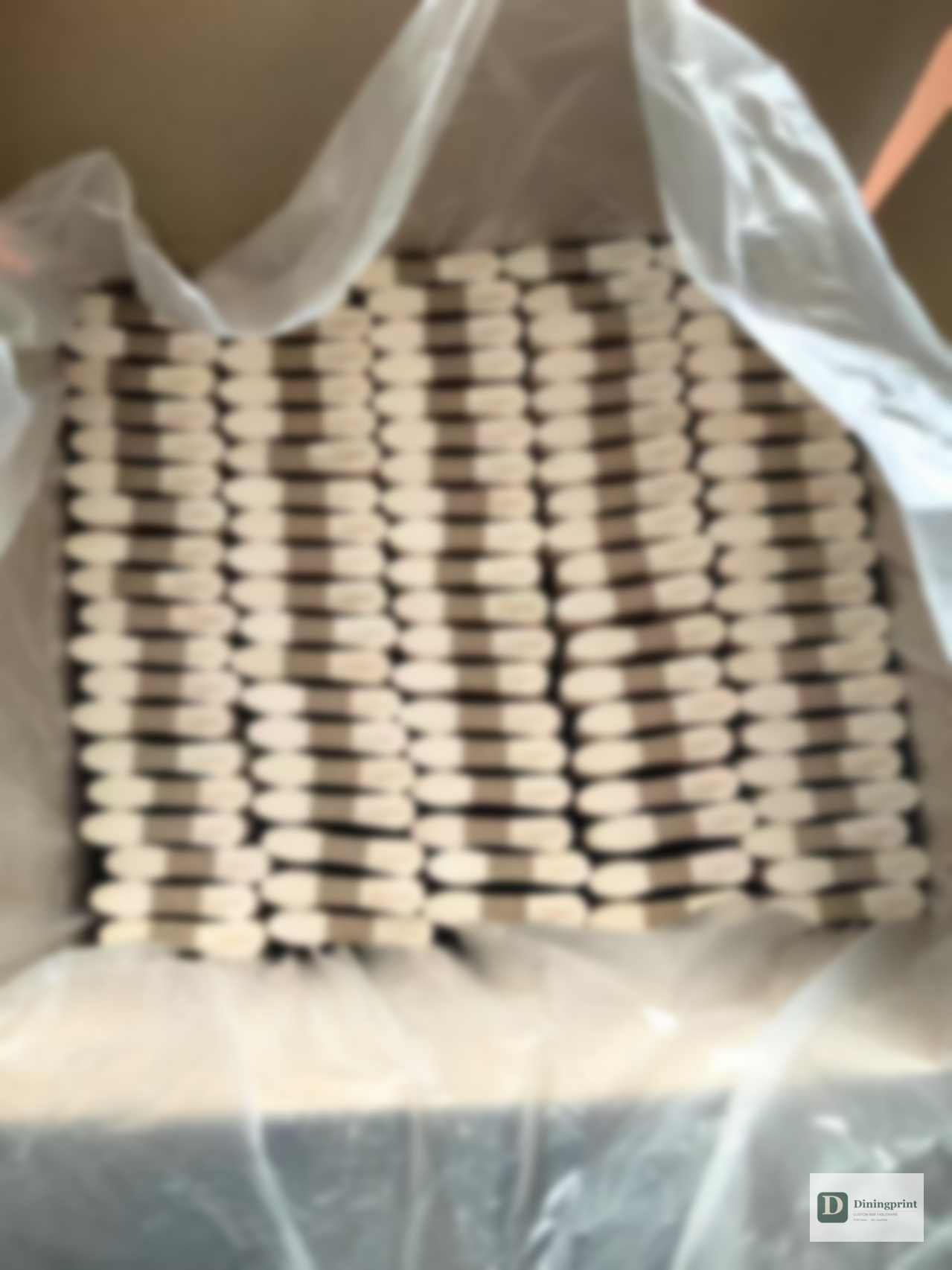
Container orientation matters more than it sounds: cartons are loaded long-edge-up so that the lighter top layers don't compress the wrapped product below. This is something many smaller factories skip when load-time pressure builds; a brief look at how your supplier loads sample cartons (ask for a loading photo before they seal the container) catches most issues.
What we don't show on camera
Four things are missing from this tour by design:
- Customer brand names. The Häagen-Dazs, Dreyer's, Emirates, and White Castle work shown above is real, but every visible logo has been blurred. Your run will get the same treatment in any public-facing media we produce — that's the supplier-confidentiality default.
- Worker faces. Operators on camera are shown from the side or back per the same confidentiality default.
- Internal QC station. Defect identification, fluorescence-test for moisture, and dimensional sampling happen in a separate room not shown here. Available on request as part of a factory audit.
- Pricing artifacts. Carton labels and shipping marks would reveal customer SKUs and discount structures; those are cropped out of every frame.
What a restaurant operator should look for in any factory video
If a prospective supplier sends you their own factory walkthrough video (most will, on request), three things are worth checking against what you saw above:
- Is the floor actually running, or is it staged? Real production lines have raw stock in flight, finished cartons piling up at the end, and operators visible. A "clean and empty" factory floor on camera is often a sample-show floor, not the actual bulk line.
- Does the wrap line look uniform? Look at the spacing and alignment of wrapped product as it exits the wrapping machine. Drift in spacing usually means belt tension is out of spec — and that translates to wrap-seam failures in the carton.
- How are cartons stacked and oriented? Tall stacks of light cartons on top of heavier ones; cartons oriented with the long edge down; product visible through tape gaps — all signal a factory that prioritises speed over arrival condition.
None of these issues are deal-breakers individually, but two or three of them together are a signal worth investigating before placing a 100,000+ unit PO.
About this tour
Diningprint is a B2B export brand based in Dalian, China, supplying custom-printed disposable tableware to 60+ countries. We work with established Northern China partner factories (including Tenglong Wood Products Co., Ltd., est. 2000) rather than running our own plant — this is intentional, because our buyers benefit from the supply-flexibility of being able to source the right factory match for each project rather than being locked into one production line.
If you'd like to see your own artwork running on a real production line — without committing to bulk — try our chopstick customizer to preview the design, or request a printed sample kit for under $50. For volume quotes, the quote form returns a tier-based estimate as you type.
Filmed in May 2026 at a Northern China partner factory. All customer brand names visible in the original footage have been blurred for supplier-confidentiality. Worker faces are shown from the side or back per the same policy.
Quick answers from buyers like you
How long does it take to produce a custom-printed chopstick order from artwork approval to sealed carton?
A typical 50,000-unit custom-printed order takes 18–25 days from artwork approval to sealed export carton. This breaks down as roughly 2–4 days for printing plate setup, 10–15 days of production line time, 2–3 days for individual wrapping and bundling, and 1–2 days for QC and carton packing. Sea freight to most US/EU ports adds an additional 15–30 days.
What happens to defective pieces during production?
Pieces that fail inline QC at the cutting and shaping stations (about 5–8% of output) are pulled and ground into wood chips, which the factory sells to a paper pulp buyer. Nothing is discarded — the secondary revenue from waste material is a real line item in the factory's economics.
Why do you blur the customer brand names in the videos?
Supplier-confidentiality is our default policy. Most B2B customers, especially major foodservice brands, expect their manufacturing partner not to publicize their custom artwork without explicit written permission. We apply the same default to all customer work in public-facing media unless the customer specifically authorizes us to show the logo.
Is wood safer than bamboo for disposable food-contact tableware?
Both materials are safe when properly processed. Wood (typically birchwood) requires a 10+ hour steaming step before cutting, which is mandatory for food-contact compliance — this is what gives FDA, LFGB, and equivalent certifications. Bamboo can be similarly steamed but the step is sometimes optional depending on the factory's process. The right question for any supplier is not 'wood or bamboo' but 'what is your sterilization process for raw stock?'
How many chopsticks fit in a standard shipping container?
A 20-foot container holds approximately 800,000–1,200,000 pairs of bamboo chopsticks depending on packaging density and wrap type. A 40-foot high-cube container holds 1.8–2.6 million pairs. Individually wrapped chopsticks take roughly 30–40% more volume than bundled chopsticks, so individually-wrapped orders ship in slightly smaller per-container quantities.
What's the minimum order quantity that runs on the bulk production line shown in the videos?
Standard MOQ for custom-printed bamboo chopsticks is 20,000 pairs, which runs as a normal bulk job on the line shown. The fixed 1,000-piece paid trial order runs on the same physical line during scheduled small-batch windows. The $49 multi-SKU sample kit uses digital printing on a separate short-run station, not the main production floor.
Where is the factory located?
Our partner factory is in Liaoning Province, Northern China — the historic hub for wood disposable tableware manufacturing thanks to managed birch and bamboo forests and proximity to Dalian port. Diningprint is headquartered in Dalian and ships FOB Dalian on most B2B orders.
Can buyers visit the factory in person?
Yes. We arrange factory visits for B2B buyers as part of qualification for orders above 100,000 units, or on request for any prospective long-term supplier relationship. Visits typically cover the cutting line, printing stations, and packing area; the internal QC station is shown on request.
Keep going on related sourcing topics.
Hot Stamp vs Offset vs Digital: Custom Chopstick Printing Methods Compared
Hot stamp for premium foil logos. Offset for high-volume full-color sleeves. Digital for small runs and variable artwork. Here's the cost, MOQ, and decision framework for each.
Read article
How to Choose a Custom Chopstick Supplier: 2026 Restaurant Owner's Guide
MOQ, real unit costs, lead times, FSC compliance, and the 10 questions every restaurant buyer should ask a chopstick factory before signing a PO.
Read article
Custom Chopstick MOQ Explained: How Much Should You Order for Your First Run?
Real entry MOQ is 20,000 pairs. Below that, you have a free sample, a $49 printed kit, and a fixed 1,000 pc paid trial path. Here's how to pick the right one for your first order.
Read article
Custom-printed chopsticks for sushi restaurants.
Birchwood tensogue, branded paper sleeves, and printed napkins that match the precision of your menu. From 5-location sushi bars in Berlin to 200-store franchise chains in Tokyo — we've packed millions of pairs.
See guide
Custom packaging for coffee shops & cafés.
Branded wooden stirrers, printed napkins, custom paper sleeves, and FSC takeaway packaging. Turn every takeaway cup into a brand touchpoint — without the printer costs of doing it locally.
See guide
Custom chopsticks & disposable tableware for event catering.
Branded chopsticks for 200-guest weddings, wooden cutlery sets for 5,000-person festivals, custom-printed napkins for corporate dinners. Volume discounts and flexible lead times for one-off events.
See guide
Branded takeout packaging for ghost kitchens.
When the only contact your customer has with your brand is the packaging that arrives at their door, the chopstick sleeve and cutlery wrapper carry the entire experience. Built for delivery-first restaurant brands.
See guide